 Image 1 of 1
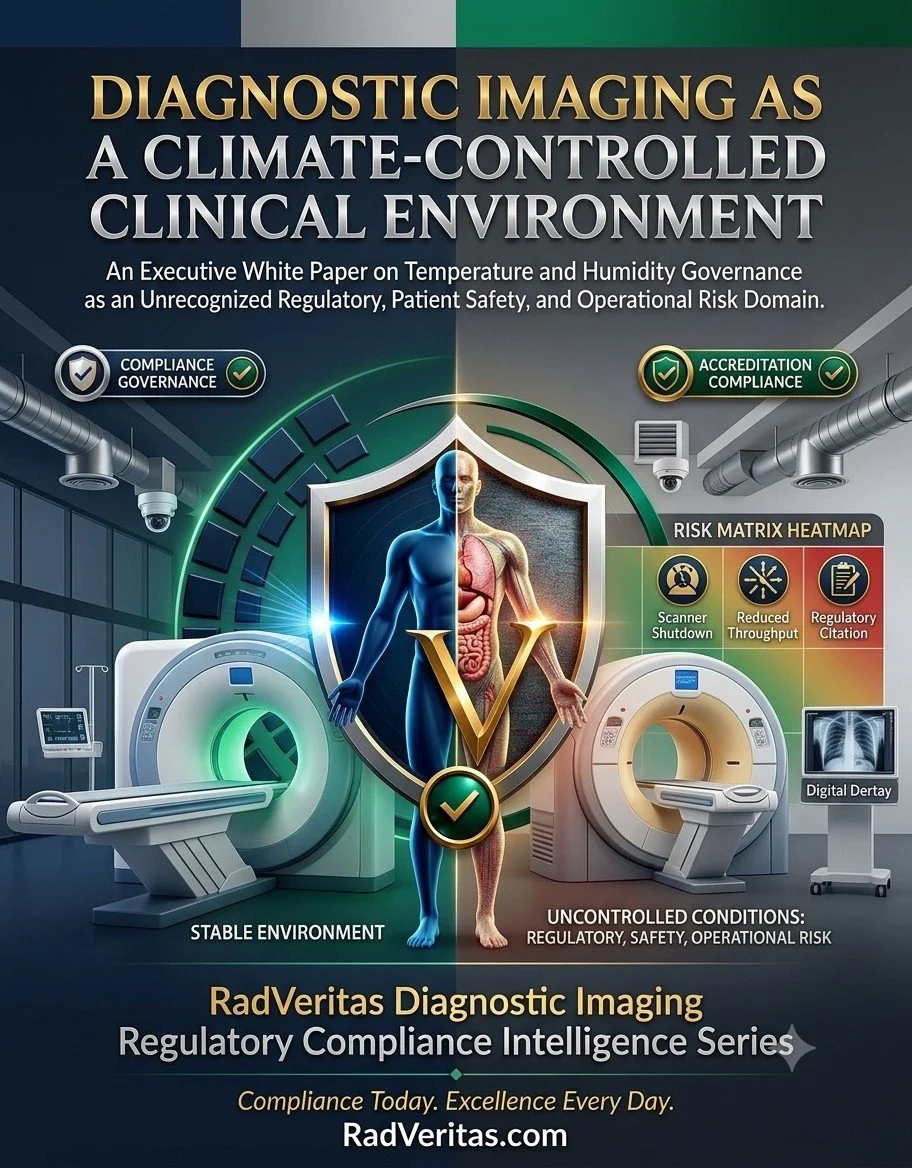
Diagnostic Imaging as a Climate-Controlled Clinical Environment™
Executive White Paper on Temperature and Humidity Governance in Diagnostic Imaging
Protect Equipment. Safeguard Patients. Reduce Risk. Strengthen Compliance.
Temperature and humidity are often viewed as facilities management concerns. In reality, they represent one of the most overlooked regulatory, patient safety, operational, and accreditation risks in diagnostic imaging.
The Diagnostic Imaging as a Climate-Controlled Clinical Environment™ Executive White Paper challenges traditional thinking by demonstrating how environmental control directly affects imaging system performance, patient safety, equipment reliability, regulatory compliance, workflow continuity, and organizational resilience.
Developed for healthcare executives, imaging leaders, facilities professionals, biomedical engineers, and accreditation teams, this white paper provides a practical governance framework for managing climate control as a mission-critical component of diagnostic imaging operations.
Why Environmental Control Matters
Every diagnostic imaging modality operates within manufacturer-defined environmental specifications for temperature, humidity, and air quality.
When these conditions fall outside acceptable limits, organizations may experience:
Equipment shutdowns and service interruptions
Image quality degradation
Increased equipment failures
Regulatory deficiencies
Accreditation findings
Reduced patient throughput
Delayed diagnosis and treatment
Increased operational costs
Patient safety risks
This white paper explains why climate control should no longer be viewed solely as a facilities issue, but as an enterprise-wide governance responsibility that directly impacts compliance, quality, and operational performance.
What Makes This White Paper Different
Most guidance addresses HVAC systems from an engineering perspective.
This executive resource examines climate control through the lens of healthcare leadership, regulatory compliance, risk management, patient safety, and operational excellence.
It provides an integrated framework that connects environmental conditions with organizational performance, helping leaders identify hidden vulnerabilities before they result in equipment failures, regulatory citations, or patient care disruptions.
Key Topics Covered
Climate Control Governance
Establish leadership accountability for maintaining compliant environmental conditions across all diagnostic imaging areas.
Regulatory and Accreditation Expectations
Understand how temperature and humidity management supports compliance with manufacturer requirements, accreditation standards, and healthcare regulatory expectations.
Equipment Performance Protection
Learn how environmental stability contributes to equipment reliability, image quality, system longevity, and reduced downtime.
Patient Safety
Recognize how uncontrolled environmental conditions can indirectly affect patient care, diagnostic confidence, scheduling efficiency, and clinical outcomes.
Operational Risk Management
Identify environmental vulnerabilities that increase workflow interruptions, service delays, maintenance costs, and operational inefficiencies.
Continuous Monitoring
Develop monitoring programs that detect environmental deviations early, allowing proactive intervention before equipment performance is affected.
Executive Risk Areas Addressed
This white paper helps organizations proactively identify and manage risks associated with:
✔ Temperature excursions
✔ Humidity fluctuations
✔ HVAC system failures
✔ Scanner downtime
✔ Reduced imaging throughput
✔ Image quality degradation
✔ Equipment reliability concerns
✔ Regulatory deficiencies
✔ Accreditation findings
✔ Operational disruptions
✔ Preventive maintenance coordination
✔ Environmental monitoring documentation
Practical Leadership Strategies
The white paper provides actionable recommendations to help healthcare leaders:
Develop enterprise climate control governance programs
Align facilities management with imaging operations
Implement environmental monitoring and alert systems
Standardize escalation and response procedures
Strengthen preventive maintenance coordination
Improve documentation and regulatory defensibility
Reduce equipment downtime through proactive oversight
Integrate environmental performance into quality improvement initiatives
Enhance interdisciplinary collaboration between imaging, facilities, biomedical engineering, infection prevention, and leadership
Build sustainable operational resilience through continuous environmental monitoring
Organizational Benefits
Strengthen Regulatory Compliance
Support continuous alignment with environmental requirements that influence imaging system performance and regulatory readiness.
Improve Accreditation Readiness
Demonstrate effective oversight of environmental conditions that support safe, reliable diagnostic imaging operations.
Protect Equipment Investments
Reduce unnecessary equipment failures, service interruptions, and premature component degradation.
Improve Operational Efficiency
Maintain consistent imaging availability, minimize downtime, and improve patient throughput.
Enhance Patient Safety
Provide stable operating conditions that support accurate imaging, dependable workflows, and uninterrupted patient care.
Reduce Organizational Risk
Identify environmental vulnerabilities before they lead to compliance deficiencies, operational disruptions, or financial loss.
Built for Modern Healthcare Organizations
Healthcare organizations invest millions of dollars in advanced imaging technology, yet many continue to underestimate the operational importance of maintaining optimal environmental conditions.
This executive white paper provides a practical roadmap for integrating climate control into broader governance, quality, and risk management programs, helping organizations strengthen resilience while protecting patients, staff, and critical imaging infrastructure.
Climate Control Is More Than an Engineering Issue. It Is a Leadership Responsibility.
High-performing diagnostic imaging programs recognize that environmental stability is fundamental to regulatory compliance, operational reliability, equipment performance, and patient safety.
The Diagnostic Imaging as a Climate-Controlled Clinical Environment™ Executive White Paper provides the insight, governance framework, and practical strategies needed to transform environmental management into a strategic organizational advantage.
Protect Your Equipment. Protect Your Patients. Protect Your Organization.
Reduce risk. Improve reliability. Strengthen compliance. Drive operational excellence.
RadVeritas™
Compliance • Quality • Governance
Expert Insights. Practical Solutions. Real-World Impact.
Helping Healthcare Leaders Integrate Climate Control Governance into Diagnostic Imaging Operations to Improve Compliance, Protect Critical Imaging Systems, Enhance Patient Safety, and Build Sustainable Operational Excellence.
Executive White Paper on Temperature and Humidity Governance in Diagnostic Imaging
Protect Equipment. Safeguard Patients. Reduce Risk. Strengthen Compliance.
Temperature and humidity are often viewed as facilities management concerns. In reality, they represent one of the most overlooked regulatory, patient safety, operational, and accreditation risks in diagnostic imaging.
The Diagnostic Imaging as a Climate-Controlled Clinical Environment™ Executive White Paper challenges traditional thinking by demonstrating how environmental control directly affects imaging system performance, patient safety, equipment reliability, regulatory compliance, workflow continuity, and organizational resilience.
Developed for healthcare executives, imaging leaders, facilities professionals, biomedical engineers, and accreditation teams, this white paper provides a practical governance framework for managing climate control as a mission-critical component of diagnostic imaging operations.
Why Environmental Control Matters
Every diagnostic imaging modality operates within manufacturer-defined environmental specifications for temperature, humidity, and air quality.
When these conditions fall outside acceptable limits, organizations may experience:
Equipment shutdowns and service interruptions
Image quality degradation
Increased equipment failures
Regulatory deficiencies
Accreditation findings
Reduced patient throughput
Delayed diagnosis and treatment
Increased operational costs
Patient safety risks
This white paper explains why climate control should no longer be viewed solely as a facilities issue, but as an enterprise-wide governance responsibility that directly impacts compliance, quality, and operational performance.
What Makes This White Paper Different
Most guidance addresses HVAC systems from an engineering perspective.
This executive resource examines climate control through the lens of healthcare leadership, regulatory compliance, risk management, patient safety, and operational excellence.
It provides an integrated framework that connects environmental conditions with organizational performance, helping leaders identify hidden vulnerabilities before they result in equipment failures, regulatory citations, or patient care disruptions.
Key Topics Covered
Climate Control Governance
Establish leadership accountability for maintaining compliant environmental conditions across all diagnostic imaging areas.
Regulatory and Accreditation Expectations
Understand how temperature and humidity management supports compliance with manufacturer requirements, accreditation standards, and healthcare regulatory expectations.
Equipment Performance Protection
Learn how environmental stability contributes to equipment reliability, image quality, system longevity, and reduced downtime.
Patient Safety
Recognize how uncontrolled environmental conditions can indirectly affect patient care, diagnostic confidence, scheduling efficiency, and clinical outcomes.
Operational Risk Management
Identify environmental vulnerabilities that increase workflow interruptions, service delays, maintenance costs, and operational inefficiencies.
Continuous Monitoring
Develop monitoring programs that detect environmental deviations early, allowing proactive intervention before equipment performance is affected.
Executive Risk Areas Addressed
This white paper helps organizations proactively identify and manage risks associated with:
✔ Temperature excursions
✔ Humidity fluctuations
✔ HVAC system failures
✔ Scanner downtime
✔ Reduced imaging throughput
✔ Image quality degradation
✔ Equipment reliability concerns
✔ Regulatory deficiencies
✔ Accreditation findings
✔ Operational disruptions
✔ Preventive maintenance coordination
✔ Environmental monitoring documentation
Practical Leadership Strategies
The white paper provides actionable recommendations to help healthcare leaders:
Develop enterprise climate control governance programs
Align facilities management with imaging operations
Implement environmental monitoring and alert systems
Standardize escalation and response procedures
Strengthen preventive maintenance coordination
Improve documentation and regulatory defensibility
Reduce equipment downtime through proactive oversight
Integrate environmental performance into quality improvement initiatives
Enhance interdisciplinary collaboration between imaging, facilities, biomedical engineering, infection prevention, and leadership
Build sustainable operational resilience through continuous environmental monitoring
Organizational Benefits
Strengthen Regulatory Compliance
Support continuous alignment with environmental requirements that influence imaging system performance and regulatory readiness.
Improve Accreditation Readiness
Demonstrate effective oversight of environmental conditions that support safe, reliable diagnostic imaging operations.
Protect Equipment Investments
Reduce unnecessary equipment failures, service interruptions, and premature component degradation.
Improve Operational Efficiency
Maintain consistent imaging availability, minimize downtime, and improve patient throughput.
Enhance Patient Safety
Provide stable operating conditions that support accurate imaging, dependable workflows, and uninterrupted patient care.
Reduce Organizational Risk
Identify environmental vulnerabilities before they lead to compliance deficiencies, operational disruptions, or financial loss.
Built for Modern Healthcare Organizations
Healthcare organizations invest millions of dollars in advanced imaging technology, yet many continue to underestimate the operational importance of maintaining optimal environmental conditions.
This executive white paper provides a practical roadmap for integrating climate control into broader governance, quality, and risk management programs, helping organizations strengthen resilience while protecting patients, staff, and critical imaging infrastructure.
Climate Control Is More Than an Engineering Issue. It Is a Leadership Responsibility.
High-performing diagnostic imaging programs recognize that environmental stability is fundamental to regulatory compliance, operational reliability, equipment performance, and patient safety.
The Diagnostic Imaging as a Climate-Controlled Clinical Environment™ Executive White Paper provides the insight, governance framework, and practical strategies needed to transform environmental management into a strategic organizational advantage.
Protect Your Equipment. Protect Your Patients. Protect Your Organization.
Reduce risk. Improve reliability. Strengthen compliance. Drive operational excellence.
RadVeritas™
Compliance • Quality • Governance
Expert Insights. Practical Solutions. Real-World Impact.
Helping Healthcare Leaders Integrate Climate Control Governance into Diagnostic Imaging Operations to Improve Compliance, Protect Critical Imaging Systems, Enhance Patient Safety, and Build Sustainable Operational Excellence.