 Image 1 of 1
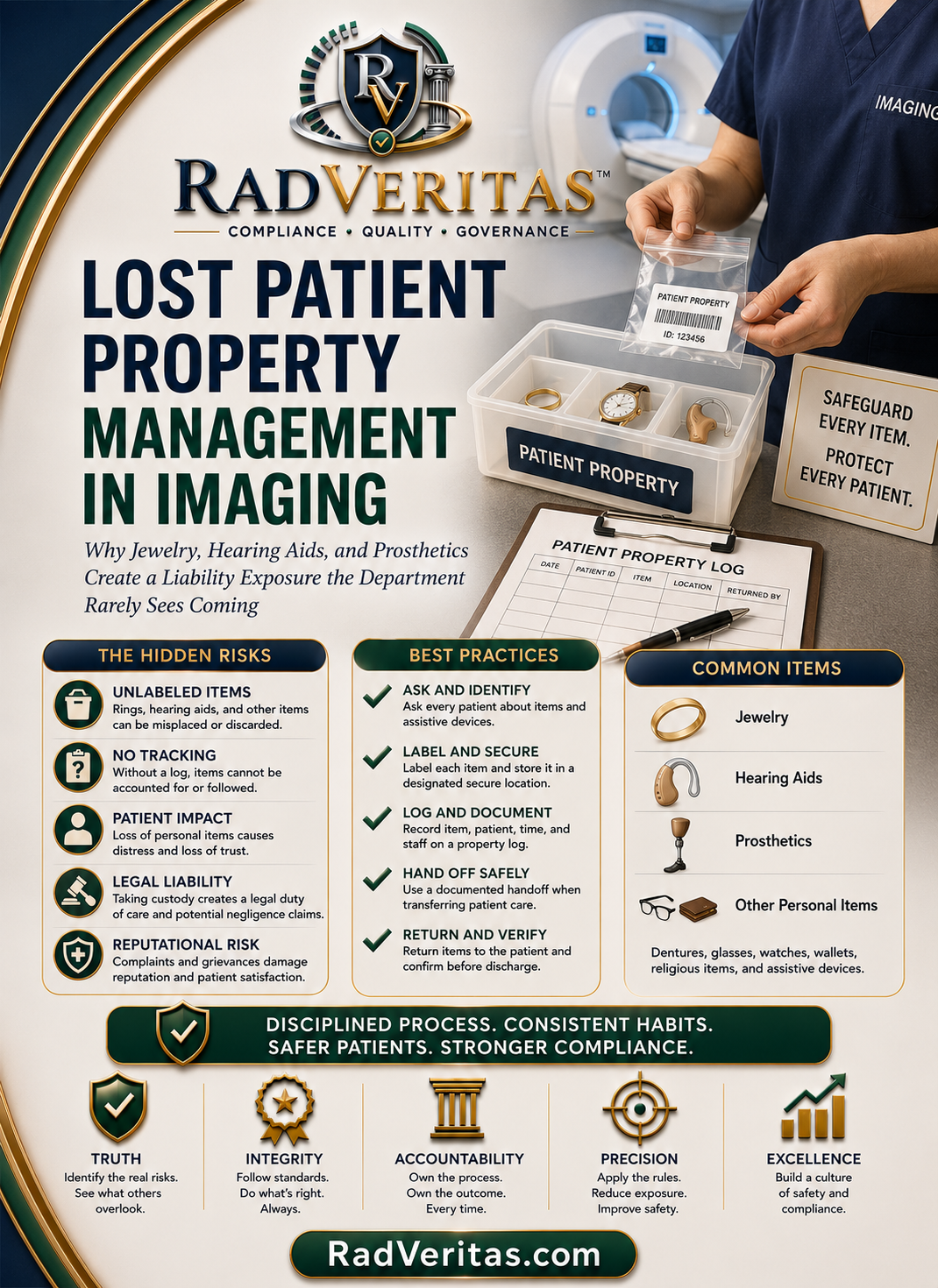
Lost Patient Property Management in Imaging™
Protect Patient Belongings. Reduce Liability. Strengthen Accountability.
The Executive Resource for Building a Defensible Patient Property Management Program in Diagnostic Imaging.
Every day, patients entrust diagnostic imaging departments with their most valuable personal belongings, including wedding rings, hearing aids, dentures, eyeglasses, prosthetics, wallets, mobile devices, religious items, and other assistive devices.
When those items are misplaced, damaged, or lost, the consequences extend far beyond replacement costs. Patient complaints, liability claims, regulatory scrutiny, staff distrust, and reputational damage can all stem from a single breakdown in property management.
The Lost Patient Property Management in Imaging™ guide provides healthcare organizations with a comprehensive framework to establish standardized processes that protect patient property, reduce organizational risk, and improve patient confidence through consistent, accountable practices.
Why Patient Property Management Matters
Every item removed from a patient creates a chain of responsibility.
Without standardized procedures, organizations face unnecessary exposure from:
Lost or misplaced patient belongings
Inconsistent documentation
Breakdowns during patient handoffs
Patient complaints and grievances
Financial reimbursement claims
Legal liability
Staff accountability issues
Reduced patient trust
Operational inefficiencies
Regulatory and accreditation concerns
A disciplined property management process protects both patients and healthcare organizations while reinforcing a culture of safety and accountability.
What Makes This Resource Different
Unlike general lost-and-found policies, this executive guide focuses specifically on the unique operational challenges within diagnostic imaging departments.
It addresses property management across the complete imaging workflow, including:
Outpatient imaging
Emergency Department imaging
Inpatient imaging
Surgical and procedural imaging
Trauma imaging
Mobile imaging
MRI safety screening
CT and Interventional Radiology preparation
Nuclear Medicine
Radiation Oncology
Patient transport and care transitions
The framework integrates operational best practices with regulatory expectations to create a consistent, defensible process for safeguarding patient belongings.
Comprehensive Topics Covered
Patient Property Identification
Implement standardized screening procedures to identify jewelry, hearing aids, dentures, prosthetics, eyeglasses, wallets, mobile devices, and other personal belongings before imaging begins.
Property Documentation
Establish clear documentation standards that record each item, its condition, storage location, transfer of custody, and return to the patient.
Secure Storage Procedures
Develop secure, organized storage systems that minimize the risk of loss, theft, damage, or unauthorized access.
Chain of Custody
Create documented handoff procedures that establish accountability whenever patient property changes possession between departments, caregivers, or transport personnel.
Return Verification
Implement standardized verification processes to ensure belongings are returned to the correct patient before discharge or transfer.
Staff Accountability
Define responsibilities for every member of the care team to ensure consistent handling of patient property across all imaging environments.
Key Risks Addressed
The guide helps organizations reduce risks associated with:
✔ Lost patient belongings
✔ Unlabeled personal items
✔ Missing documentation
✔ Breakdowns in the chain of custody
✔ Hearing aids, dentures, and prosthetic devices
✔ Jewelry and valuables
✔ Mobile phones and electronic devices
✔ Patient complaints and grievances
✔ Liability and negligence claims
✔ Reimbursement disputes
✔ Staff accountability failures
✔ Reputational harm
Best Practices Included
The resource provides practical guidance for:
Identifying patient belongings before imaging
Labeling and securing valuables
Establishing standardized property logs
Creating chain-of-custody documentation
Performing patient handoff verification
Returning belongings safely before discharge
Training staff on consistent property management procedures
Auditing compliance and identifying process gaps
Investigating property-related incidents
Building a culture of accountability and patient trust
Designed For
Ideal for:
Diagnostic Imaging Directors
Radiology Administrators
Imaging Managers and Supervisors
MRI Safety Officers
Patient Experience Leaders
Compliance Officers
Risk Management Professionals
Accreditation Coordinators
Quality Improvement Teams
Emergency Department Leaders
Perioperative Services
Transport Services
Hospital Executives
Organizational Benefits
Protect Patients
Safeguard valuables, assistive devices, and personal belongings while improving the overall patient experience.
Reduce Liability
Minimize claims, complaints, investigations, and financial losses associated with missing or damaged property.
Improve Accountability
Establish standardized documentation and chain-of-custody processes that clearly define staff responsibilities.
Enhance Operational Efficiency
Create consistent workflows that reduce confusion, improve communication, and streamline patient transitions.
Strengthen Regulatory Readiness
Support compliance with organizational policies, patient rights, quality standards, and accreditation expectations through documented, repeatable processes.
Build Patient Confidence
Demonstrate professionalism and respect by protecting the belongings patients value most during their care.
Built for Modern Diagnostic Imaging Operations
Patient property management is more than a courtesy. It is a patient safety, quality, operational, and risk management responsibility.
Whether handling a wedding ring before an MRI, securing a hearing aid before CT, documenting dentures before sedation, or returning personal items after a procedure, every interaction reflects an organization's commitment to excellence.
The Lost Patient Property Management in Imaging™ guide provides the policies, workflows, documentation tools, and leadership strategies needed to create a standardized, defensible property management program across every imaging modality.
Small Items. Significant Responsibility.
The loss of a single personal item can damage patient trust, generate costly claims, and expose weaknesses in organizational processes.
The Lost Patient Property Management in Imaging™ guide helps healthcare leaders transform patient property management into a disciplined, standardized practice that protects patients, strengthens accountability, and reduces organizational risk.
Protect Every Item. Protect Every Patient.
Reduce liability. Strengthen accountability. Improve patient confidence. Build a culture of operational excellence.
RadVeritas™
Compliance • Quality • Governance
Compliance Today. Excellence Every Day.
Expert Insights. Practical Solutions. Real-World Impact.
Helping Diagnostic Imaging Leaders Standardize Patient Property Management, Reduce Organizational Risk, Strengthen Operational Accountability, and Deliver a Safer, More Trusted Patient Experience.
Protect Patient Belongings. Reduce Liability. Strengthen Accountability.
The Executive Resource for Building a Defensible Patient Property Management Program in Diagnostic Imaging.
Every day, patients entrust diagnostic imaging departments with their most valuable personal belongings, including wedding rings, hearing aids, dentures, eyeglasses, prosthetics, wallets, mobile devices, religious items, and other assistive devices.
When those items are misplaced, damaged, or lost, the consequences extend far beyond replacement costs. Patient complaints, liability claims, regulatory scrutiny, staff distrust, and reputational damage can all stem from a single breakdown in property management.
The Lost Patient Property Management in Imaging™ guide provides healthcare organizations with a comprehensive framework to establish standardized processes that protect patient property, reduce organizational risk, and improve patient confidence through consistent, accountable practices.
Why Patient Property Management Matters
Every item removed from a patient creates a chain of responsibility.
Without standardized procedures, organizations face unnecessary exposure from:
Lost or misplaced patient belongings
Inconsistent documentation
Breakdowns during patient handoffs
Patient complaints and grievances
Financial reimbursement claims
Legal liability
Staff accountability issues
Reduced patient trust
Operational inefficiencies
Regulatory and accreditation concerns
A disciplined property management process protects both patients and healthcare organizations while reinforcing a culture of safety and accountability.
What Makes This Resource Different
Unlike general lost-and-found policies, this executive guide focuses specifically on the unique operational challenges within diagnostic imaging departments.
It addresses property management across the complete imaging workflow, including:
Outpatient imaging
Emergency Department imaging
Inpatient imaging
Surgical and procedural imaging
Trauma imaging
Mobile imaging
MRI safety screening
CT and Interventional Radiology preparation
Nuclear Medicine
Radiation Oncology
Patient transport and care transitions
The framework integrates operational best practices with regulatory expectations to create a consistent, defensible process for safeguarding patient belongings.
Comprehensive Topics Covered
Patient Property Identification
Implement standardized screening procedures to identify jewelry, hearing aids, dentures, prosthetics, eyeglasses, wallets, mobile devices, and other personal belongings before imaging begins.
Property Documentation
Establish clear documentation standards that record each item, its condition, storage location, transfer of custody, and return to the patient.
Secure Storage Procedures
Develop secure, organized storage systems that minimize the risk of loss, theft, damage, or unauthorized access.
Chain of Custody
Create documented handoff procedures that establish accountability whenever patient property changes possession between departments, caregivers, or transport personnel.
Return Verification
Implement standardized verification processes to ensure belongings are returned to the correct patient before discharge or transfer.
Staff Accountability
Define responsibilities for every member of the care team to ensure consistent handling of patient property across all imaging environments.
Key Risks Addressed
The guide helps organizations reduce risks associated with:
✔ Lost patient belongings
✔ Unlabeled personal items
✔ Missing documentation
✔ Breakdowns in the chain of custody
✔ Hearing aids, dentures, and prosthetic devices
✔ Jewelry and valuables
✔ Mobile phones and electronic devices
✔ Patient complaints and grievances
✔ Liability and negligence claims
✔ Reimbursement disputes
✔ Staff accountability failures
✔ Reputational harm
Best Practices Included
The resource provides practical guidance for:
Identifying patient belongings before imaging
Labeling and securing valuables
Establishing standardized property logs
Creating chain-of-custody documentation
Performing patient handoff verification
Returning belongings safely before discharge
Training staff on consistent property management procedures
Auditing compliance and identifying process gaps
Investigating property-related incidents
Building a culture of accountability and patient trust
Designed For
Ideal for:
Diagnostic Imaging Directors
Radiology Administrators
Imaging Managers and Supervisors
MRI Safety Officers
Patient Experience Leaders
Compliance Officers
Risk Management Professionals
Accreditation Coordinators
Quality Improvement Teams
Emergency Department Leaders
Perioperative Services
Transport Services
Hospital Executives
Organizational Benefits
Protect Patients
Safeguard valuables, assistive devices, and personal belongings while improving the overall patient experience.
Reduce Liability
Minimize claims, complaints, investigations, and financial losses associated with missing or damaged property.
Improve Accountability
Establish standardized documentation and chain-of-custody processes that clearly define staff responsibilities.
Enhance Operational Efficiency
Create consistent workflows that reduce confusion, improve communication, and streamline patient transitions.
Strengthen Regulatory Readiness
Support compliance with organizational policies, patient rights, quality standards, and accreditation expectations through documented, repeatable processes.
Build Patient Confidence
Demonstrate professionalism and respect by protecting the belongings patients value most during their care.
Built for Modern Diagnostic Imaging Operations
Patient property management is more than a courtesy. It is a patient safety, quality, operational, and risk management responsibility.
Whether handling a wedding ring before an MRI, securing a hearing aid before CT, documenting dentures before sedation, or returning personal items after a procedure, every interaction reflects an organization's commitment to excellence.
The Lost Patient Property Management in Imaging™ guide provides the policies, workflows, documentation tools, and leadership strategies needed to create a standardized, defensible property management program across every imaging modality.
Small Items. Significant Responsibility.
The loss of a single personal item can damage patient trust, generate costly claims, and expose weaknesses in organizational processes.
The Lost Patient Property Management in Imaging™ guide helps healthcare leaders transform patient property management into a disciplined, standardized practice that protects patients, strengthens accountability, and reduces organizational risk.
Protect Every Item. Protect Every Patient.
Reduce liability. Strengthen accountability. Improve patient confidence. Build a culture of operational excellence.
RadVeritas™
Compliance • Quality • Governance
Compliance Today. Excellence Every Day.
Expert Insights. Practical Solutions. Real-World Impact.
Helping Diagnostic Imaging Leaders Standardize Patient Property Management, Reduce Organizational Risk, Strengthen Operational Accountability, and Deliver a Safer, More Trusted Patient Experience.