 Image 1 of 1
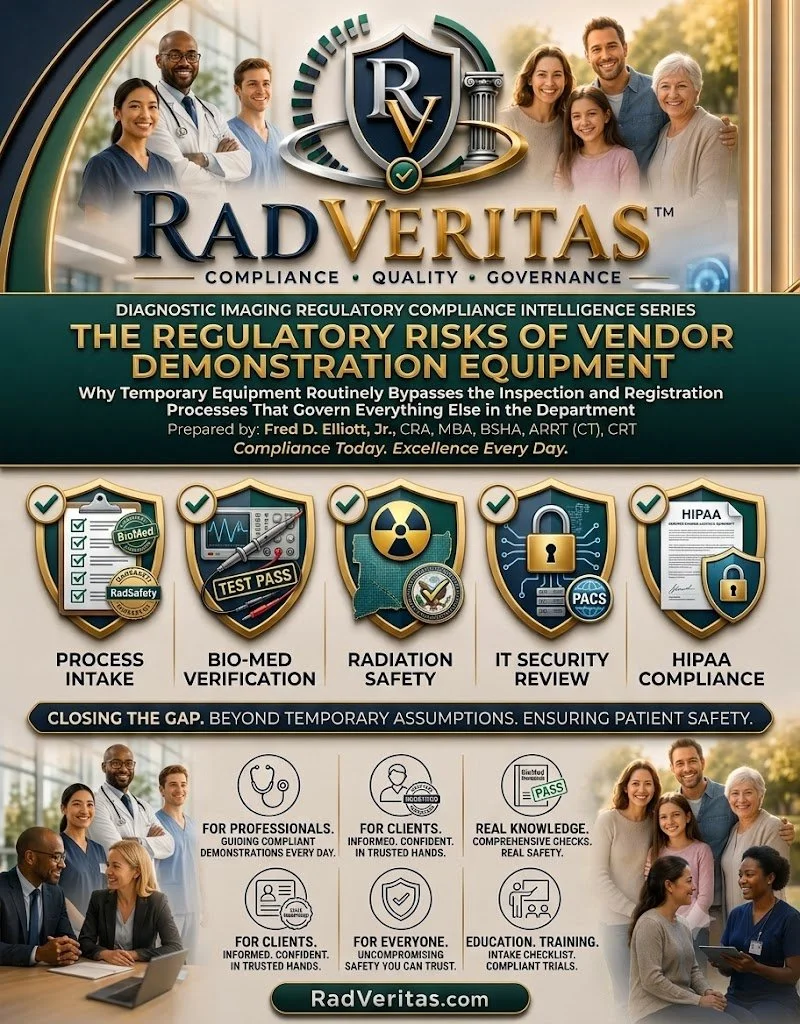
The Regulatory Risks of Vendor Demonstration Equipment™
Transform Temporary Equipment Demonstrations into Fully Governed, Regulatory-Compliant Clinical Processes.
Because "Temporary" Equipment Can Create Permanent Regulatory Consequences.
Vendor demonstration equipment plays an essential role in evaluating new technology, supporting capital planning, and advancing patient care. Yet, demonstration systems often arrive through pathways that bypass the rigorous inspection, registration, cybersecurity, radiation safety, and compliance processes required for permanently installed medical equipment.
The result is a hidden governance gap that can expose healthcare organizations to regulatory deficiencies, patient safety risks, cybersecurity vulnerabilities, and operational liability.
The Regulatory Risks of Vendor Demonstration Equipment™ provides healthcare leaders with a comprehensive governance framework for safely evaluating, approving, monitoring, and removing vendor demonstration equipment while maintaining continuous compliance with regulatory, accreditation, and organizational requirements.
Designed specifically for diagnostic imaging environments, this executive resource integrates clinical operations, biomedical engineering, radiation safety, information technology, cybersecurity, infection prevention, facilities management, and leadership oversight into one standardized demonstration equipment program.
Why This Resource Matters
Every temporary imaging system introduced into a healthcare organization has the potential to affect patient safety, data security, clinical workflows, and regulatory compliance.
Without a standardized intake and governance process, organizations increase their exposure to:
Unapproved clinical equipment entering patient care areas
Incomplete Biomedical Engineering inspections
Radiation safety oversight gaps
Cybersecurity vulnerabilities
PACS, RIS, and network integration risks
HIPAA and patient privacy concerns
Infection prevention deficiencies
Improper equipment documentation
Accreditation survey findings
Increased organizational liability
This guide provides a structured process for evaluating demonstration equipment before it reaches patients or clinical operations.
What Makes This Resource Different
Most organizations rely on informal coordination between vendors and department managers.
This resource establishes an enterprise-wide governance program that standardizes every phase of the demonstration lifecycle, from initial request through final equipment removal.
The framework integrates:
Regulatory Compliance
Biomedical Engineering
Radiation Safety
Medical Physics
Information Technology
Cybersecurity
HIPAA Compliance
Infection Prevention
Clinical Engineering
Facilities Management
Risk Management
Executive Leadership
The result is a defensible, repeatable process that protects patients, staff, and the organization while supporting informed technology evaluation.
Comprehensive Topics Covered
Vendor Equipment Intake
Establish standardized approval processes before demonstration equipment is delivered, installed, or connected to hospital systems.
Biomedical Engineering Verification
Verify equipment safety, performance, electrical integrity, preventive maintenance status, and manufacturer documentation before clinical use.
Radiation Safety and Medical Physics
Confirm regulatory registration requirements, shielding considerations, radiation safety evaluations, dose optimization, and physics oversight where applicable.
Information Technology and Cybersecurity
Evaluate network connectivity, software security, remote access, cybersecurity controls, device authentication, and integration with enterprise imaging infrastructure.
HIPAA and Patient Privacy
Ensure demonstration equipment complies with organizational privacy policies, secure handling of Protected Health Information (PHI), and data retention requirements.
Leadership Governance
Define accountability across Imaging Leadership, Purchasing, Clinical Engineering, Information Technology, Compliance, Radiation Safety, and Vendor Management.
Key Risks Addressed
This guide helps organizations proactively reduce:
✔ Unapproved demonstration equipment entering clinical areas
✔ Biomedical Engineering inspection gaps
✔ Radiation safety compliance deficiencies
✔ Cybersecurity vulnerabilities
✔ Unauthorized network connections
✔ HIPAA and patient privacy exposure
✔ Incomplete vendor documentation
✔ Accreditation and regulatory survey findings
✔ Operational disruption during equipment evaluations
✔ Organizational liability associated with temporary equipment
Practical Resources Included
This executive resource provides implementation-ready tools, including:
Vendor Demonstration Equipment Intake Checklist
Executive Approval Workflow
Biomedical Engineering Inspection Forms
Radiation Safety Evaluation Checklists
Medical Physics Review Templates
Cybersecurity Risk Assessment Tools
IT Connectivity Approval Forms
HIPAA and Privacy Review Checklists
Vendor Responsibility Agreements
Demonstration Equipment Tracking Logs
Corrective Action Plan Templates
Executive Dashboard Metrics and Audit Tools
Designed For
Ideal for:
Diagnostic Imaging Directors
Radiology Administrators
Biomedical Engineering Leaders
Clinical Engineering Departments
Radiation Safety Officers
Medical Physicists
Information Technology Leaders
Cybersecurity Teams
Compliance Officers
Purchasing and Supply Chain Leaders
Risk Management Professionals
Executive Healthcare Leadership
Organizational Benefits
Strengthen Patient Safety
Ensure demonstration equipment meets organizational safety expectations before it enters clinical service.
Improve Regulatory Compliance
Establish standardized governance that aligns with federal, state, accreditation, and organizational requirements.
Protect Enterprise Systems
Reduce cybersecurity and data integrity risks by controlling how temporary devices connect to clinical networks.
Improve Technology Evaluation
Create structured, objective evaluation processes that support informed capital purchasing decisions.
Reduce Organizational Risk
Prevent documentation gaps, inspection failures, and compliance deficiencies that may result in regulatory findings or liability.
Standardize Enterprise Governance
Develop a repeatable process that applies consistently across hospitals, imaging centers, outpatient facilities, and integrated health systems.
Built for Modern Healthcare Technology Programs
Vendor demonstration equipment should never bypass the same governance principles that protect patients, staff, and organizational assets.
Whether evaluating new imaging technology, introducing advanced software, piloting AI-enabled solutions, or conducting capital equipment assessments, The Regulatory Risks of Vendor Demonstration Equipment™ provides healthcare leaders with the framework needed to evaluate innovation without compromising compliance.
Innovation Requires Oversight.
The most successful healthcare organizations evaluate new technology through disciplined governance, not informal processes.
The Regulatory Risks of Vendor Demonstration Equipment™ helps healthcare organizations build a standardized demonstration equipment program that protects patients, strengthens regulatory compliance, supports informed purchasing decisions, and ensures every temporary device meets permanent standards of safety and accountability.
Evaluate Technology with Confidence.
Strengthen governance. Reduce risk. Protect patients. Support innovation.
RadVeritas™
Compliance • Quality • Governance
Compliance Today. Excellence Every Day.
Expert Insights. Practical Solutions. Real-World Impact.
Helping Diagnostic Imaging Leaders Build Enterprise Vendor Demonstration Equipment Programs That Strengthen Regulatory Compliance, Enhance Cybersecurity, Improve Technology Evaluation, Protect Patient Safety, and Support Sustainable Operational Excellence.
Transform Temporary Equipment Demonstrations into Fully Governed, Regulatory-Compliant Clinical Processes.
Because "Temporary" Equipment Can Create Permanent Regulatory Consequences.
Vendor demonstration equipment plays an essential role in evaluating new technology, supporting capital planning, and advancing patient care. Yet, demonstration systems often arrive through pathways that bypass the rigorous inspection, registration, cybersecurity, radiation safety, and compliance processes required for permanently installed medical equipment.
The result is a hidden governance gap that can expose healthcare organizations to regulatory deficiencies, patient safety risks, cybersecurity vulnerabilities, and operational liability.
The Regulatory Risks of Vendor Demonstration Equipment™ provides healthcare leaders with a comprehensive governance framework for safely evaluating, approving, monitoring, and removing vendor demonstration equipment while maintaining continuous compliance with regulatory, accreditation, and organizational requirements.
Designed specifically for diagnostic imaging environments, this executive resource integrates clinical operations, biomedical engineering, radiation safety, information technology, cybersecurity, infection prevention, facilities management, and leadership oversight into one standardized demonstration equipment program.
Why This Resource Matters
Every temporary imaging system introduced into a healthcare organization has the potential to affect patient safety, data security, clinical workflows, and regulatory compliance.
Without a standardized intake and governance process, organizations increase their exposure to:
Unapproved clinical equipment entering patient care areas
Incomplete Biomedical Engineering inspections
Radiation safety oversight gaps
Cybersecurity vulnerabilities
PACS, RIS, and network integration risks
HIPAA and patient privacy concerns
Infection prevention deficiencies
Improper equipment documentation
Accreditation survey findings
Increased organizational liability
This guide provides a structured process for evaluating demonstration equipment before it reaches patients or clinical operations.
What Makes This Resource Different
Most organizations rely on informal coordination between vendors and department managers.
This resource establishes an enterprise-wide governance program that standardizes every phase of the demonstration lifecycle, from initial request through final equipment removal.
The framework integrates:
Regulatory Compliance
Biomedical Engineering
Radiation Safety
Medical Physics
Information Technology
Cybersecurity
HIPAA Compliance
Infection Prevention
Clinical Engineering
Facilities Management
Risk Management
Executive Leadership
The result is a defensible, repeatable process that protects patients, staff, and the organization while supporting informed technology evaluation.
Comprehensive Topics Covered
Vendor Equipment Intake
Establish standardized approval processes before demonstration equipment is delivered, installed, or connected to hospital systems.
Biomedical Engineering Verification
Verify equipment safety, performance, electrical integrity, preventive maintenance status, and manufacturer documentation before clinical use.
Radiation Safety and Medical Physics
Confirm regulatory registration requirements, shielding considerations, radiation safety evaluations, dose optimization, and physics oversight where applicable.
Information Technology and Cybersecurity
Evaluate network connectivity, software security, remote access, cybersecurity controls, device authentication, and integration with enterprise imaging infrastructure.
HIPAA and Patient Privacy
Ensure demonstration equipment complies with organizational privacy policies, secure handling of Protected Health Information (PHI), and data retention requirements.
Leadership Governance
Define accountability across Imaging Leadership, Purchasing, Clinical Engineering, Information Technology, Compliance, Radiation Safety, and Vendor Management.
Key Risks Addressed
This guide helps organizations proactively reduce:
✔ Unapproved demonstration equipment entering clinical areas
✔ Biomedical Engineering inspection gaps
✔ Radiation safety compliance deficiencies
✔ Cybersecurity vulnerabilities
✔ Unauthorized network connections
✔ HIPAA and patient privacy exposure
✔ Incomplete vendor documentation
✔ Accreditation and regulatory survey findings
✔ Operational disruption during equipment evaluations
✔ Organizational liability associated with temporary equipment
Practical Resources Included
This executive resource provides implementation-ready tools, including:
Vendor Demonstration Equipment Intake Checklist
Executive Approval Workflow
Biomedical Engineering Inspection Forms
Radiation Safety Evaluation Checklists
Medical Physics Review Templates
Cybersecurity Risk Assessment Tools
IT Connectivity Approval Forms
HIPAA and Privacy Review Checklists
Vendor Responsibility Agreements
Demonstration Equipment Tracking Logs
Corrective Action Plan Templates
Executive Dashboard Metrics and Audit Tools
Designed For
Ideal for:
Diagnostic Imaging Directors
Radiology Administrators
Biomedical Engineering Leaders
Clinical Engineering Departments
Radiation Safety Officers
Medical Physicists
Information Technology Leaders
Cybersecurity Teams
Compliance Officers
Purchasing and Supply Chain Leaders
Risk Management Professionals
Executive Healthcare Leadership
Organizational Benefits
Strengthen Patient Safety
Ensure demonstration equipment meets organizational safety expectations before it enters clinical service.
Improve Regulatory Compliance
Establish standardized governance that aligns with federal, state, accreditation, and organizational requirements.
Protect Enterprise Systems
Reduce cybersecurity and data integrity risks by controlling how temporary devices connect to clinical networks.
Improve Technology Evaluation
Create structured, objective evaluation processes that support informed capital purchasing decisions.
Reduce Organizational Risk
Prevent documentation gaps, inspection failures, and compliance deficiencies that may result in regulatory findings or liability.
Standardize Enterprise Governance
Develop a repeatable process that applies consistently across hospitals, imaging centers, outpatient facilities, and integrated health systems.
Built for Modern Healthcare Technology Programs
Vendor demonstration equipment should never bypass the same governance principles that protect patients, staff, and organizational assets.
Whether evaluating new imaging technology, introducing advanced software, piloting AI-enabled solutions, or conducting capital equipment assessments, The Regulatory Risks of Vendor Demonstration Equipment™ provides healthcare leaders with the framework needed to evaluate innovation without compromising compliance.
Innovation Requires Oversight.
The most successful healthcare organizations evaluate new technology through disciplined governance, not informal processes.
The Regulatory Risks of Vendor Demonstration Equipment™ helps healthcare organizations build a standardized demonstration equipment program that protects patients, strengthens regulatory compliance, supports informed purchasing decisions, and ensures every temporary device meets permanent standards of safety and accountability.
Evaluate Technology with Confidence.
Strengthen governance. Reduce risk. Protect patients. Support innovation.
RadVeritas™
Compliance • Quality • Governance
Compliance Today. Excellence Every Day.
Expert Insights. Practical Solutions. Real-World Impact.
Helping Diagnostic Imaging Leaders Build Enterprise Vendor Demonstration Equipment Programs That Strengthen Regulatory Compliance, Enhance Cybersecurity, Improve Technology Evaluation, Protect Patient Safety, and Support Sustainable Operational Excellence.