 Image 1 of 1
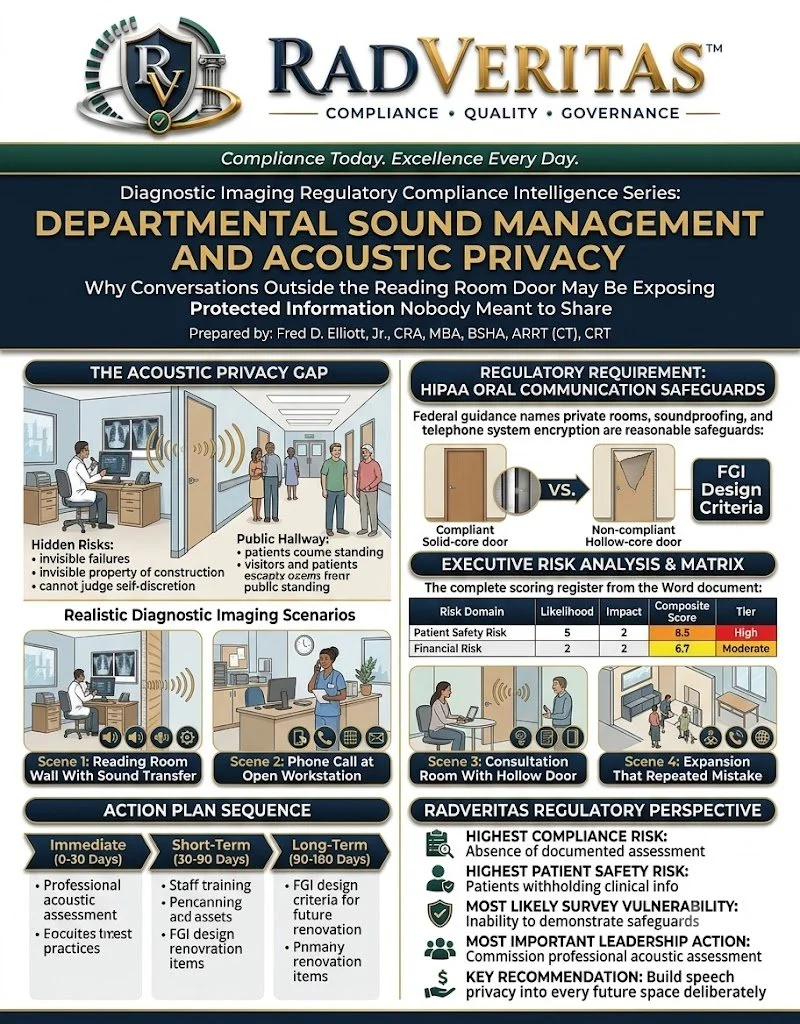
Departmental Sound Management and Acoustic Privacy™
Protect Conversations. Protect Patients. Protect Compliance.
A Comprehensive Governance Framework for Acoustic Privacy, Speech Confidentiality, and HIPAA Compliance in Diagnostic Imaging.
Not every privacy breach begins with a cyberattack.
Sometimes it begins with a conversation that travels through a hollow-core door.
A radiologist discussing critical findings. A technologist confirming a patient's diagnosis. A physician consulting another provider. A scheduler verifying protected health information over the telephone.
When speech extends beyond the intended space, Protected Health Information (PHI) can unintentionally become accessible to patients, visitors, contractors, or staff without a legitimate need to know.
Departmental Sound Management and Acoustic Privacy™ provides healthcare organizations with a comprehensive governance framework for identifying, assessing, and mitigating acoustic privacy risks throughout diagnostic imaging departments. By integrating architectural planning, operational workflows, leadership oversight, and regulatory compliance, this resource helps organizations safeguard confidential conversations while strengthening patient trust and organizational resilience.
Why This Resource Matters
Speech privacy is an essential component of patient privacy.
Diagnostic Imaging environments generate thousands of verbal communications every day involving patient identifiers, imaging findings, clinical discussions, scheduling information, and treatment decisions.
Without effective acoustic safeguards, organizations increase their exposure to:
Unauthorized disclosure of Protected Health Information
HIPAA privacy violations
Patient complaints and grievances
Loss of patient confidence
Regulatory deficiencies
Accreditation findings
Reputational harm
Operational redesign costs
This executive resource helps healthcare leaders proactively identify vulnerabilities before they become reportable privacy events.
What Makes This Resource Different
Most privacy programs emphasize electronic information security while overlooking verbal communication.
This guide focuses specifically on acoustic privacy within diagnostic imaging, combining regulatory expectations with practical architectural and operational strategies.
The framework addresses:
Reading Rooms
Consultation Rooms
Imaging Control Rooms
Patient Registration Areas
Scheduling Offices
Shared Workspaces
Hallways and Public Corridors
Telephone Communications
Staff Collaboration Areas
Future Imaging Facility Design
Rather than treating sound privacy as a construction issue alone, this resource establishes it as an enterprise governance responsibility.
Comprehensive Topics Covered
Acoustic Privacy Risk Assessment
Identify areas where confidential conversations may unintentionally extend beyond intended spaces because of building design, workflow, occupancy, or operational practices.
Architectural Design Considerations
Evaluate doors, wall assemblies, ceilings, glazing, HVAC systems, room placement, and sound isolation strategies that support confidential communication.
HIPAA Oral Communication Safeguards
Develop policies and operational practices that reduce the risk of unauthorized verbal disclosure while maintaining efficient clinical communication.
Operational Workflow Optimization
Improve staff practices related to discussions, consultations, telephone use, interdisciplinary communication, and patient interactions.
Leadership Governance
Establish accountability for monitoring acoustic privacy, implementing corrective actions, and incorporating speech confidentiality into facility planning and renovation projects.
Continuous Improvement
Create sustainable monitoring programs using audits, risk assessments, staff education, and performance metrics to maintain long-term compliance.
Key Risks Addressed
This guide helps organizations proactively reduce:
✔ Unauthorized verbal disclosure of Protected Health Information
✔ Reading room sound transfer
✔ Consultation room confidentiality gaps
✔ Public hallway overhearing
✔ Telephone privacy vulnerabilities
✔ Shared workspace communication risks
✔ Architectural design deficiencies
✔ HIPAA privacy complaints
✔ Accreditation survey findings
✔ Loss of patient confidence and trust
Practical Resources Included
This executive resource provides implementation-ready tools, including:
Acoustic Privacy Risk Assessment Templates
Reading Room Evaluation Checklists
Consultation Room Assessment Guides
HIPAA Oral Communication Audit Tools
Architectural Planning Recommendations
Sound Isolation Assessment Frameworks
Staff Education and Awareness Materials
Leadership Walkthrough Checklists
Corrective Action Plan Templates
Performance Monitoring Dashboards
Renovation Planning Considerations
Continuous Compliance Audit Tools
Designed For
Ideal for:
Diagnostic Imaging Directors
Radiology Administrators
Compliance Officers
Privacy Officers
HIPAA Program Leaders
Facilities Management
Healthcare Architects and Facility Planners
Accreditation Coordinators
Patient Experience Leaders
Quality Improvement Professionals
Risk Management Teams
Executive Healthcare Leadership
Organizational Benefits
Strengthen Patient Privacy
Protect confidential conversations and reinforce every patient's expectation of privacy throughout the imaging experience.
Improve Regulatory Compliance
Demonstrate effective safeguards supporting HIPAA Privacy Rule requirements and accreditation expectations for confidential communication.
Reduce Organizational Risk
Identify architectural and operational vulnerabilities before they result in privacy complaints, investigations, or corrective action.
Support Better Facility Design
Incorporate acoustic privacy into new construction, renovations, and imaging department expansion projects.
Enhance Patient Confidence
Create environments where patients feel secure discussing sensitive medical information without concern that others may overhear.
Build Sustainable Governance
Integrate acoustic privacy into routine operations, leadership oversight, facility planning, and continuous quality improvement initiatives.
Built for Modern Diagnostic Imaging Operations
Protecting patient privacy extends beyond securing electronic records. Every conversation within an imaging department is part of the organization's commitment to confidentiality, professionalism, and patient-centered care.
Whether constructing a new imaging center, renovating existing facilities, preparing for accreditation surveys, or strengthening HIPAA compliance programs, Departmental Sound Management and Acoustic Privacy™ provides healthcare leaders with the practical guidance needed to transform acoustic privacy into a measurable component of operational excellence.
Privacy Is More Than Data. It Is Every Conversation.
The most effective privacy programs protect information wherever it exists, including the spoken word.
Departmental Sound Management and Acoustic Privacy™ helps healthcare organizations establish proactive acoustic privacy programs that strengthen patient trust, reduce regulatory exposure, support architectural excellence, and create environments where confidential conversations remain confidential.
Protect Conversations. Strengthen Privacy. Build Trust.
Reduce risk. Improve confidentiality. Strengthen compliance. Privacy design.
RadVeritas™
Compliance • Quality • Governance
Compliance Today. Excellence Every Day.
Expert Insights. Practical Solutions. Real-World Impact.
Helping Diagnostic Imaging Leaders Build Enterprise Acoustic Privacy Programs That Protect Confidential Communications, Strengthen HIPAA Compliance, Enhance Facility Design, and Promote Patient Trust Through Sustainable Governance and Operational Excellence.
Protect Conversations. Protect Patients. Protect Compliance.
A Comprehensive Governance Framework for Acoustic Privacy, Speech Confidentiality, and HIPAA Compliance in Diagnostic Imaging.
Not every privacy breach begins with a cyberattack.
Sometimes it begins with a conversation that travels through a hollow-core door.
A radiologist discussing critical findings. A technologist confirming a patient's diagnosis. A physician consulting another provider. A scheduler verifying protected health information over the telephone.
When speech extends beyond the intended space, Protected Health Information (PHI) can unintentionally become accessible to patients, visitors, contractors, or staff without a legitimate need to know.
Departmental Sound Management and Acoustic Privacy™ provides healthcare organizations with a comprehensive governance framework for identifying, assessing, and mitigating acoustic privacy risks throughout diagnostic imaging departments. By integrating architectural planning, operational workflows, leadership oversight, and regulatory compliance, this resource helps organizations safeguard confidential conversations while strengthening patient trust and organizational resilience.
Why This Resource Matters
Speech privacy is an essential component of patient privacy.
Diagnostic Imaging environments generate thousands of verbal communications every day involving patient identifiers, imaging findings, clinical discussions, scheduling information, and treatment decisions.
Without effective acoustic safeguards, organizations increase their exposure to:
Unauthorized disclosure of Protected Health Information
HIPAA privacy violations
Patient complaints and grievances
Loss of patient confidence
Regulatory deficiencies
Accreditation findings
Reputational harm
Operational redesign costs
This executive resource helps healthcare leaders proactively identify vulnerabilities before they become reportable privacy events.
What Makes This Resource Different
Most privacy programs emphasize electronic information security while overlooking verbal communication.
This guide focuses specifically on acoustic privacy within diagnostic imaging, combining regulatory expectations with practical architectural and operational strategies.
The framework addresses:
Reading Rooms
Consultation Rooms
Imaging Control Rooms
Patient Registration Areas
Scheduling Offices
Shared Workspaces
Hallways and Public Corridors
Telephone Communications
Staff Collaboration Areas
Future Imaging Facility Design
Rather than treating sound privacy as a construction issue alone, this resource establishes it as an enterprise governance responsibility.
Comprehensive Topics Covered
Acoustic Privacy Risk Assessment
Identify areas where confidential conversations may unintentionally extend beyond intended spaces because of building design, workflow, occupancy, or operational practices.
Architectural Design Considerations
Evaluate doors, wall assemblies, ceilings, glazing, HVAC systems, room placement, and sound isolation strategies that support confidential communication.
HIPAA Oral Communication Safeguards
Develop policies and operational practices that reduce the risk of unauthorized verbal disclosure while maintaining efficient clinical communication.
Operational Workflow Optimization
Improve staff practices related to discussions, consultations, telephone use, interdisciplinary communication, and patient interactions.
Leadership Governance
Establish accountability for monitoring acoustic privacy, implementing corrective actions, and incorporating speech confidentiality into facility planning and renovation projects.
Continuous Improvement
Create sustainable monitoring programs using audits, risk assessments, staff education, and performance metrics to maintain long-term compliance.
Key Risks Addressed
This guide helps organizations proactively reduce:
✔ Unauthorized verbal disclosure of Protected Health Information
✔ Reading room sound transfer
✔ Consultation room confidentiality gaps
✔ Public hallway overhearing
✔ Telephone privacy vulnerabilities
✔ Shared workspace communication risks
✔ Architectural design deficiencies
✔ HIPAA privacy complaints
✔ Accreditation survey findings
✔ Loss of patient confidence and trust
Practical Resources Included
This executive resource provides implementation-ready tools, including:
Acoustic Privacy Risk Assessment Templates
Reading Room Evaluation Checklists
Consultation Room Assessment Guides
HIPAA Oral Communication Audit Tools
Architectural Planning Recommendations
Sound Isolation Assessment Frameworks
Staff Education and Awareness Materials
Leadership Walkthrough Checklists
Corrective Action Plan Templates
Performance Monitoring Dashboards
Renovation Planning Considerations
Continuous Compliance Audit Tools
Designed For
Ideal for:
Diagnostic Imaging Directors
Radiology Administrators
Compliance Officers
Privacy Officers
HIPAA Program Leaders
Facilities Management
Healthcare Architects and Facility Planners
Accreditation Coordinators
Patient Experience Leaders
Quality Improvement Professionals
Risk Management Teams
Executive Healthcare Leadership
Organizational Benefits
Strengthen Patient Privacy
Protect confidential conversations and reinforce every patient's expectation of privacy throughout the imaging experience.
Improve Regulatory Compliance
Demonstrate effective safeguards supporting HIPAA Privacy Rule requirements and accreditation expectations for confidential communication.
Reduce Organizational Risk
Identify architectural and operational vulnerabilities before they result in privacy complaints, investigations, or corrective action.
Support Better Facility Design
Incorporate acoustic privacy into new construction, renovations, and imaging department expansion projects.
Enhance Patient Confidence
Create environments where patients feel secure discussing sensitive medical information without concern that others may overhear.
Build Sustainable Governance
Integrate acoustic privacy into routine operations, leadership oversight, facility planning, and continuous quality improvement initiatives.
Built for Modern Diagnostic Imaging Operations
Protecting patient privacy extends beyond securing electronic records. Every conversation within an imaging department is part of the organization's commitment to confidentiality, professionalism, and patient-centered care.
Whether constructing a new imaging center, renovating existing facilities, preparing for accreditation surveys, or strengthening HIPAA compliance programs, Departmental Sound Management and Acoustic Privacy™ provides healthcare leaders with the practical guidance needed to transform acoustic privacy into a measurable component of operational excellence.
Privacy Is More Than Data. It Is Every Conversation.
The most effective privacy programs protect information wherever it exists, including the spoken word.
Departmental Sound Management and Acoustic Privacy™ helps healthcare organizations establish proactive acoustic privacy programs that strengthen patient trust, reduce regulatory exposure, support architectural excellence, and create environments where confidential conversations remain confidential.
Protect Conversations. Strengthen Privacy. Build Trust.
Reduce risk. Improve confidentiality. Strengthen compliance. Privacy design.
RadVeritas™
Compliance • Quality • Governance
Compliance Today. Excellence Every Day.
Expert Insights. Practical Solutions. Real-World Impact.
Helping Diagnostic Imaging Leaders Build Enterprise Acoustic Privacy Programs That Protect Confidential Communications, Strengthen HIPAA Compliance, Enhance Facility Design, and Promote Patient Trust Through Sustainable Governance and Operational Excellence.