 Image 1 of 1
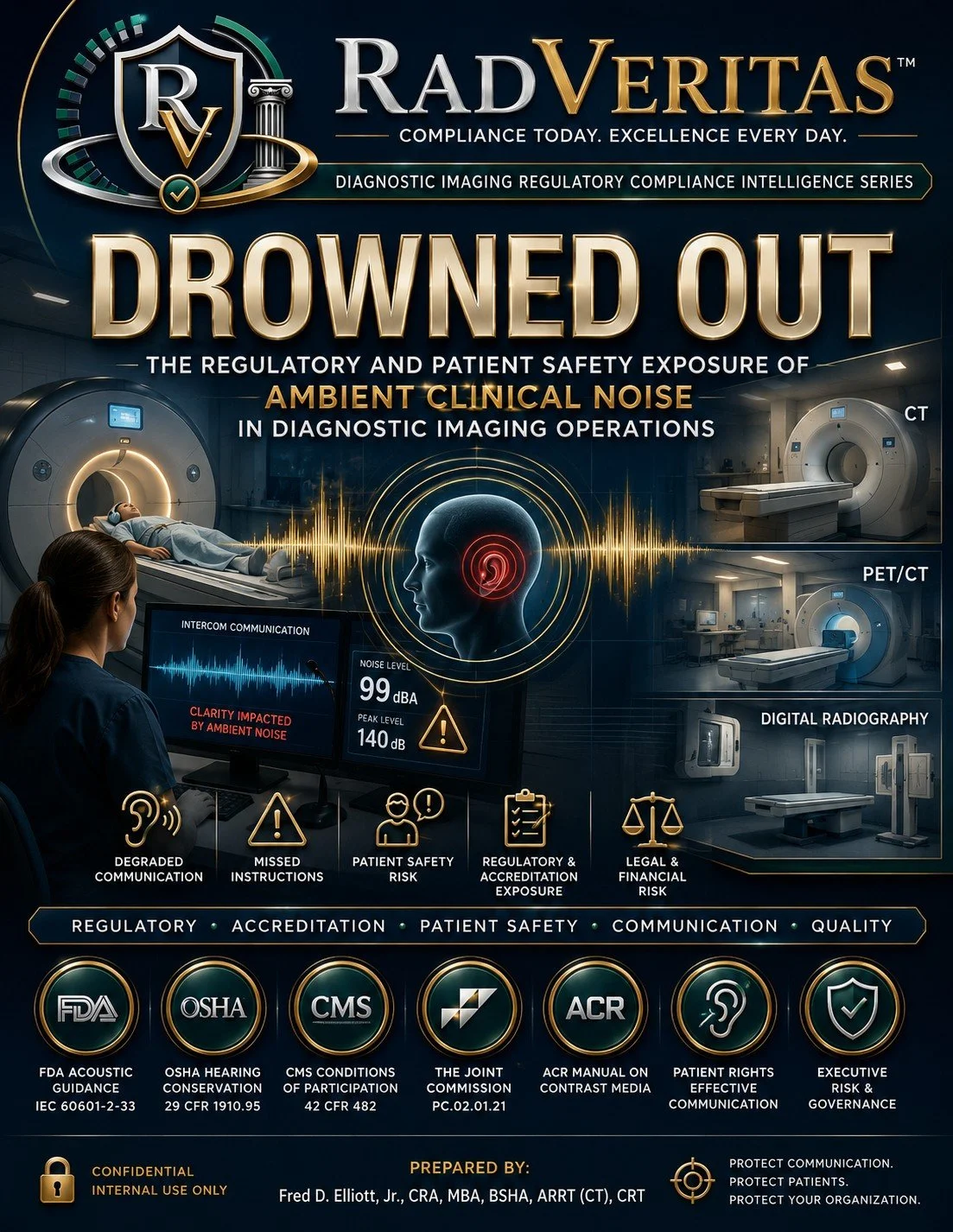
Drowned Out™ - The Regulatory and Patient Safety Exposure of Ambient Clinical Noise in Diagnostic Imaging Operations
When Patients Cannot Hear, Organizations Assume Risk.
Diagnostic imaging depends on clear communication. Yet one of the most overlooked threats to patient safety, regulatory compliance, and operational performance is not found in equipment specifications or accreditation manuals. It is found in the clinical environment itself.
Drowned Out™ is an executive white paper that examines how excessive ambient noise in diagnostic imaging departments can compromise communication, interfere with patient understanding, delay reactions, increase operational errors, and expose healthcare organizations to regulatory, legal, and accreditation risk.
Developed for healthcare executives, diagnostic imaging leaders, patient safety professionals, risk managers, and accreditation teams, this resource provides a practical framework for identifying, evaluating, and mitigating communication failures caused by high-noise clinical environments.
Why Ambient Clinical Noise Matters
Every imaging examination depends on accurate communication between healthcare professionals and patients.
When verbal instructions are masked by scanner noise, alarms, ventilation systems, conversations, or other environmental distractions, organizations risk:
Missed patient instructions
Delayed patient responses
Repeat examinations
Increased radiation exposure
Motion-related image degradation
Workflow delays
Patient anxiety and dissatisfaction
Documentation inconsistencies
Regulatory deficiencies
Increased liability exposure
This white paper demonstrates that communication failures caused by ambient clinical noise represent a significant patient safety and compliance challenge rather than simply an operational inconvenience.
What Makes This White Paper Different
Most discussions about clinical noise focus on patient comfort or occupational exposure.
Drowned Out™ approaches the issue through the combined perspectives of regulatory compliance, accreditation readiness, human factors engineering, patient safety, healthcare communication, and operational governance.
It connects environmental noise directly to organizational risk, showing how ineffective communication can affect informed consent, patient understanding, diagnostic accuracy, workflow efficiency, and regulatory defensibility.
Key Topics Covered
Patient Communication Under High-Noise Conditions
Examine how excessive environmental noise interferes with patient comprehension, cooperation, and procedural success.
Regulatory and Accreditation Considerations
Understand how communication failures may influence compliance with accreditation standards, patient rights, informed consent requirements, accessibility obligations, and quality expectations.
Human Factors and Cognitive Performance
Explore how auditory overload affects clinical decision-making, attention, communication accuracy, and staff performance.
Operational Risk Management
Identify how communication breakdowns contribute to repeat imaging, delayed examinations, workflow interruptions, and avoidable operational costs.
Patient Safety
Recognize how misunderstood instructions may increase the likelihood of motion artifacts, delayed reactions, procedural interruptions, and preventable adverse events.
Organizational Governance
Develop leadership strategies that integrate communication effectiveness into patient safety, quality improvement, and enterprise risk management programs.
Practical Leadership Strategies
The white paper provides actionable guidance to help healthcare organizations:
Evaluate communication effectiveness within imaging environments
Assess ambient noise sources that interfere with patient understanding
Implement standardized communication verification techniques
Incorporate teach-back and confirmation strategies into imaging workflows
Strengthen intercom system performance and reliability
Improve accommodations for patients with hearing impairments or communication barriers
Reduce repeat imaging through improved communication practices
Integrate communication assessments into quality improvement initiatives
Monitor communication-related performance metrics
Build a culture where effective communication is recognized as a patient safety priority
Organizational Benefits
Improve Patient Safety
Reduce communication failures that contribute to repeat imaging, delayed responses, and procedural interruptions.
Strengthen Regulatory Compliance
Support consistent communication practices that align with accreditation expectations and patient-centered care standards.
Reduce Operational Risk
Minimize repeat examinations, workflow inefficiencies, and unnecessary resource utilization caused by communication breakdowns.
Enhance Patient Experience
Improve patient confidence, reduce anxiety, and promote clearer understanding throughout the imaging process.
Improve Imaging Quality
Increase first-time examination success by ensuring patients clearly understand procedural instructions.
Protect Organizational Reputation
Demonstrate a proactive commitment to communication excellence, patient safety, and continuous quality improvement.
Built for Modern Diagnostic Imaging Departments
Today's imaging environments are increasingly complex, technologically advanced, and acoustically challenging. Effective communication cannot be assumed simply because instructions are given.
Drowned Out™ provides healthcare organizations with a practical governance framework to evaluate communication effectiveness, reduce environmental barriers, and strengthen regulatory readiness through evidence-based operational improvements.
Communication Is a Patient Safety System
The ability of patients to hear, understand, and correctly respond to clinical instructions directly influences examination quality, operational efficiency, regulatory compliance, and patient outcomes.
The Drowned Out™ Executive White Paper equips healthcare leaders with the knowledge, strategies, and governance framework needed to transform communication from an overlooked operational task into a measurable component of patient safety and organizational excellence.
Make Every Instruction Heard. Every Response Understood. Every Examination Safer.
Reduce communication failures. Strengthen patient safety. Improve operational performance. Build lasting regulatory confidence.
RadVeritas™
Compliance • Quality • Governance
Expert Insights. Practical Solutions. Real-World Impact.
Helping Diagnostic Imaging Leaders Reduce Communication Risk, Strengthen Patient Safety, Improve Operational Reliability, and Build Sustainable Compliance Through Evidence-Based Communication Governance.
When Patients Cannot Hear, Organizations Assume Risk.
Diagnostic imaging depends on clear communication. Yet one of the most overlooked threats to patient safety, regulatory compliance, and operational performance is not found in equipment specifications or accreditation manuals. It is found in the clinical environment itself.
Drowned Out™ is an executive white paper that examines how excessive ambient noise in diagnostic imaging departments can compromise communication, interfere with patient understanding, delay reactions, increase operational errors, and expose healthcare organizations to regulatory, legal, and accreditation risk.
Developed for healthcare executives, diagnostic imaging leaders, patient safety professionals, risk managers, and accreditation teams, this resource provides a practical framework for identifying, evaluating, and mitigating communication failures caused by high-noise clinical environments.
Why Ambient Clinical Noise Matters
Every imaging examination depends on accurate communication between healthcare professionals and patients.
When verbal instructions are masked by scanner noise, alarms, ventilation systems, conversations, or other environmental distractions, organizations risk:
Missed patient instructions
Delayed patient responses
Repeat examinations
Increased radiation exposure
Motion-related image degradation
Workflow delays
Patient anxiety and dissatisfaction
Documentation inconsistencies
Regulatory deficiencies
Increased liability exposure
This white paper demonstrates that communication failures caused by ambient clinical noise represent a significant patient safety and compliance challenge rather than simply an operational inconvenience.
What Makes This White Paper Different
Most discussions about clinical noise focus on patient comfort or occupational exposure.
Drowned Out™ approaches the issue through the combined perspectives of regulatory compliance, accreditation readiness, human factors engineering, patient safety, healthcare communication, and operational governance.
It connects environmental noise directly to organizational risk, showing how ineffective communication can affect informed consent, patient understanding, diagnostic accuracy, workflow efficiency, and regulatory defensibility.
Key Topics Covered
Patient Communication Under High-Noise Conditions
Examine how excessive environmental noise interferes with patient comprehension, cooperation, and procedural success.
Regulatory and Accreditation Considerations
Understand how communication failures may influence compliance with accreditation standards, patient rights, informed consent requirements, accessibility obligations, and quality expectations.
Human Factors and Cognitive Performance
Explore how auditory overload affects clinical decision-making, attention, communication accuracy, and staff performance.
Operational Risk Management
Identify how communication breakdowns contribute to repeat imaging, delayed examinations, workflow interruptions, and avoidable operational costs.
Patient Safety
Recognize how misunderstood instructions may increase the likelihood of motion artifacts, delayed reactions, procedural interruptions, and preventable adverse events.
Organizational Governance
Develop leadership strategies that integrate communication effectiveness into patient safety, quality improvement, and enterprise risk management programs.
Practical Leadership Strategies
The white paper provides actionable guidance to help healthcare organizations:
Evaluate communication effectiveness within imaging environments
Assess ambient noise sources that interfere with patient understanding
Implement standardized communication verification techniques
Incorporate teach-back and confirmation strategies into imaging workflows
Strengthen intercom system performance and reliability
Improve accommodations for patients with hearing impairments or communication barriers
Reduce repeat imaging through improved communication practices
Integrate communication assessments into quality improvement initiatives
Monitor communication-related performance metrics
Build a culture where effective communication is recognized as a patient safety priority
Organizational Benefits
Improve Patient Safety
Reduce communication failures that contribute to repeat imaging, delayed responses, and procedural interruptions.
Strengthen Regulatory Compliance
Support consistent communication practices that align with accreditation expectations and patient-centered care standards.
Reduce Operational Risk
Minimize repeat examinations, workflow inefficiencies, and unnecessary resource utilization caused by communication breakdowns.
Enhance Patient Experience
Improve patient confidence, reduce anxiety, and promote clearer understanding throughout the imaging process.
Improve Imaging Quality
Increase first-time examination success by ensuring patients clearly understand procedural instructions.
Protect Organizational Reputation
Demonstrate a proactive commitment to communication excellence, patient safety, and continuous quality improvement.
Built for Modern Diagnostic Imaging Departments
Today's imaging environments are increasingly complex, technologically advanced, and acoustically challenging. Effective communication cannot be assumed simply because instructions are given.
Drowned Out™ provides healthcare organizations with a practical governance framework to evaluate communication effectiveness, reduce environmental barriers, and strengthen regulatory readiness through evidence-based operational improvements.
Communication Is a Patient Safety System
The ability of patients to hear, understand, and correctly respond to clinical instructions directly influences examination quality, operational efficiency, regulatory compliance, and patient outcomes.
The Drowned Out™ Executive White Paper equips healthcare leaders with the knowledge, strategies, and governance framework needed to transform communication from an overlooked operational task into a measurable component of patient safety and organizational excellence.
Make Every Instruction Heard. Every Response Understood. Every Examination Safer.
Reduce communication failures. Strengthen patient safety. Improve operational performance. Build lasting regulatory confidence.
RadVeritas™
Compliance • Quality • Governance
Expert Insights. Practical Solutions. Real-World Impact.
Helping Diagnostic Imaging Leaders Reduce Communication Risk, Strengthen Patient Safety, Improve Operational Reliability, and Build Sustainable Compliance Through Evidence-Based Communication Governance.