 Image 1 of 1
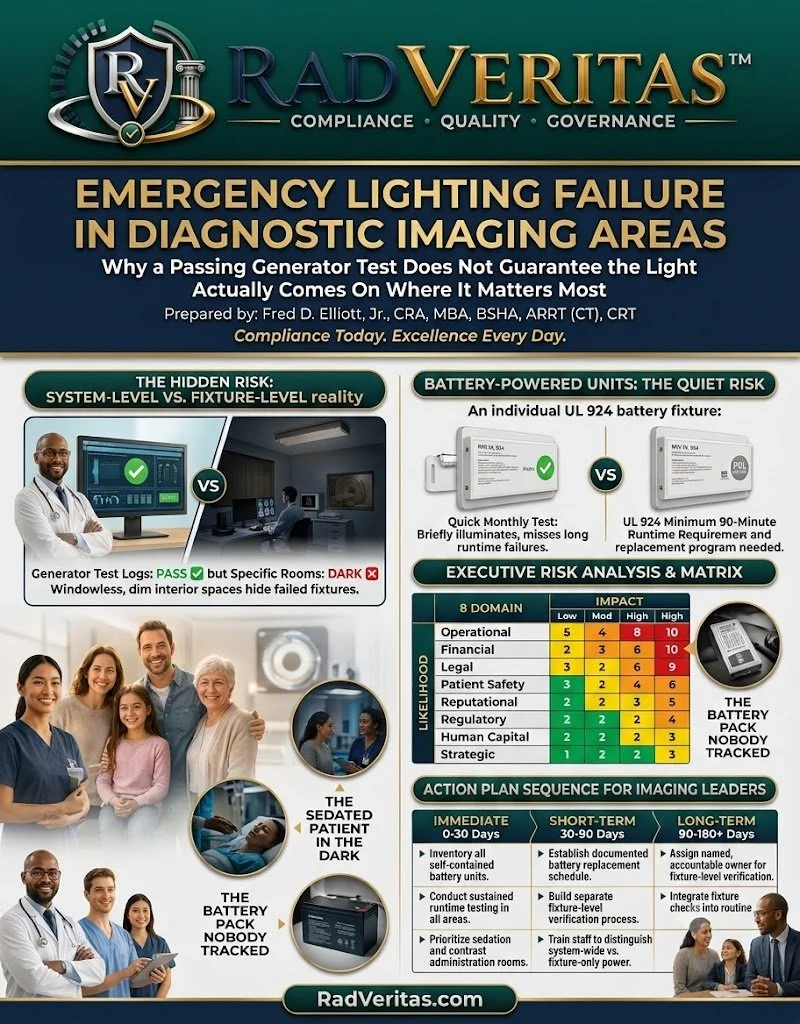
Emergency Lighting Failure in Diagnostic Imaging Areas™
When the Lights Go Out, Compliance, Patient Safety, and Operational Readiness Are Put to the Ultimate Test.
Because a Successful Generator Test Does Not Guarantee That Emergency Lighting Will Work Where Your Patients Need It Most.
Most healthcare organizations routinely test their emergency generators and believe they are fully prepared for a power outage. Yet many diagnostic imaging departments unknowingly rely on emergency lighting fixtures with aging batteries, undocumented maintenance histories, or inadequate runtime verification.
The result is a dangerous gap between system-level readiness and fixture-level performance.
Emergency Lighting Failure in Diagnostic Imaging Areas™ is a comprehensive executive reference that equips healthcare leaders with the tools, governance framework, and operational strategies needed to ensure emergency lighting systems perform reliably during actual emergencies. From battery-powered emergency fixtures to generator-supported lighting, this resource transforms emergency illumination into a measurable, auditable, and continuously managed safety program.
Why This Resource Matters
Diagnostic imaging environments present unique challenges during power failures.
Patients may be sedated, receiving intravenous contrast, positioned within MRI, CT, PET/CT, Interventional Radiology, or Nuclear Medicine suites, or undergoing time-sensitive emergency procedures when normal power is lost.
Without dependable emergency lighting, organizations may face:
Delayed patient evacuation
Increased fall risks
Medication and contrast administration errors
Staff disorientation
Equipment shutdown complications
Fire and life safety deficiencies
Survey findings
Regulatory citations
Operational disruption
Significant organizational liability
This manual provides imaging leaders with a structured governance framework to proactively identify, assess, and mitigate these risks before an emergency occurs.
What Makes This Resource Different
Most emergency preparedness programs focus on generator testing. Few evaluate whether individual emergency lighting fixtures, self-contained battery units, and imaging suite illumination actually perform as required during a prolonged outage.
This resource integrates:
Emergency Preparedness
Environment of Care
Fire and Life Safety
Facilities Management
Diagnostic Imaging Operations
Regulatory Compliance
Risk Management
Accreditation Readiness
Operational Resilience
Executive Governance
The result is a comprehensive program that connects infrastructure testing with real-world patient care conditions.
Comprehensive Topics Covered
Emergency Lighting System Governance
Develop an enterprise-wide oversight program for emergency lighting across all diagnostic imaging environments.
Generator and Fixture Performance
Understand the critical distinction between successful generator testing and individual emergency lighting fixture functionality.
Battery-Powered Emergency Lighting
Establish inspection, maintenance, replacement, and runtime verification programs for self-contained emergency lighting units.
Imaging Suite Risk Assessments
Evaluate emergency illumination in MRI, CT, Nuclear Medicine, PET/CT, Interventional Radiology, Ultrasound, and Radiography environments.
Operational Readiness
Develop procedures that support patient movement, staff response, equipment access, and emergency workflows during power interruptions.
Documentation and Compliance
Implement standardized documentation, testing schedules, maintenance records, corrective actions, and leadership oversight.
Key Risks Addressed
This resource helps organizations reduce:
✔ Emergency lighting failures
✔ Inadequate battery maintenance
✔ Fire and life safety deficiencies
✔ Environment of Care findings
✔ Patient evacuation risks
✔ Staff injury potential
✔ Regulatory citations
✔ Accreditation survey findings
✔ Operational downtime
✔ Financial and reputational exposure
Practical Resources Included
This implementation-focused guide includes:
Emergency Lighting Inspection Checklists
Battery Inventory and Replacement Logs
Runtime Verification Worksheets
Imaging Area Risk Assessments
Preventive Maintenance Schedules
Corrective Action Planning Tools
Executive Risk Matrices
Leadership Oversight Dashboards
Survey Readiness Checklists
Policy and Procedure Templates
Continuous Compliance Monitoring Tools
Performance Audit Worksheets
Designed For
Ideal for:
Diagnostic Imaging Directors
Radiology Administrators
Facilities Management
Environment of Care Leaders
Safety Officers
Emergency Preparedness Coordinators
Compliance Officers
Risk Managers
Biomedical Engineering
Accreditation Coordinators
Hospital Operations Executives
Quality Improvement Teams
Organizational Benefits
Strengthen Emergency Preparedness
Ensure emergency lighting systems perform as expected during real-world power failures, not just during scheduled generator tests.
Protect Patients and Staff
Improve visibility and safety for patients undergoing imaging procedures and staff responding during emergency conditions.
Enhance Regulatory Compliance
Support compliance with fire and life safety expectations, Environment of Care standards, emergency preparedness requirements, and accreditation readiness.
Improve Operational Reliability
Create standardized inspection, maintenance, and testing processes that reduce equipment failures and strengthen organizational resilience.
Reduce Organizational Risk
Identify hidden vulnerabilities before they become patient safety events, operational disruptions, or regulatory findings.
Build Executive Confidence
Provide leadership with measurable performance data, documented oversight, and defensible evidence of continuous compliance.
Built for Modern Diagnostic Imaging Operations
Emergency lighting is more than a facility requirement. It is a critical patient safety system that supports clinical care when every second matters.
Emergency Lighting Failure in Diagnostic Imaging Areas™ provides healthcare organizations with the governance framework, practical tools, and operational guidance needed to ensure emergency illumination remains reliable, compliant, and ready when normal power is no longer available.
Preparedness Is Proven in the Dark.
A passing generator test is only one measure of readiness. True preparedness requires confidence that every emergency lighting fixture, battery unit, and illumination pathway will perform when patients and staff depend on them most.
Emergency Lighting Failure in Diagnostic Imaging Areas™ helps healthcare leaders transform emergency lighting from a routine maintenance task into a comprehensive governance program that strengthens patient safety, regulatory compliance, and operational resilience.
Every Fixture Verified. Every Battery Accounted For. Every Emergency Prepared For.
Protect patients. Support staff. Strengthen resilience. Demonstrate compliance.
RadVeritas™
Compliance • Quality • Governance
Compliance Today. Excellence Every Day.
Expert Insights. Practical Solutions. Real-World Impact.
Helping Diagnostic Imaging Leaders Build Enterprise Programs for Emergency Lighting, Environment of Care, Fire and Life Safety, Operational Readiness, Regulatory Compliance, Risk Management, and Continuous Organizational Resilience.
When the Lights Go Out, Compliance, Patient Safety, and Operational Readiness Are Put to the Ultimate Test.
Because a Successful Generator Test Does Not Guarantee That Emergency Lighting Will Work Where Your Patients Need It Most.
Most healthcare organizations routinely test their emergency generators and believe they are fully prepared for a power outage. Yet many diagnostic imaging departments unknowingly rely on emergency lighting fixtures with aging batteries, undocumented maintenance histories, or inadequate runtime verification.
The result is a dangerous gap between system-level readiness and fixture-level performance.
Emergency Lighting Failure in Diagnostic Imaging Areas™ is a comprehensive executive reference that equips healthcare leaders with the tools, governance framework, and operational strategies needed to ensure emergency lighting systems perform reliably during actual emergencies. From battery-powered emergency fixtures to generator-supported lighting, this resource transforms emergency illumination into a measurable, auditable, and continuously managed safety program.
Why This Resource Matters
Diagnostic imaging environments present unique challenges during power failures.
Patients may be sedated, receiving intravenous contrast, positioned within MRI, CT, PET/CT, Interventional Radiology, or Nuclear Medicine suites, or undergoing time-sensitive emergency procedures when normal power is lost.
Without dependable emergency lighting, organizations may face:
Delayed patient evacuation
Increased fall risks
Medication and contrast administration errors
Staff disorientation
Equipment shutdown complications
Fire and life safety deficiencies
Survey findings
Regulatory citations
Operational disruption
Significant organizational liability
This manual provides imaging leaders with a structured governance framework to proactively identify, assess, and mitigate these risks before an emergency occurs.
What Makes This Resource Different
Most emergency preparedness programs focus on generator testing. Few evaluate whether individual emergency lighting fixtures, self-contained battery units, and imaging suite illumination actually perform as required during a prolonged outage.
This resource integrates:
Emergency Preparedness
Environment of Care
Fire and Life Safety
Facilities Management
Diagnostic Imaging Operations
Regulatory Compliance
Risk Management
Accreditation Readiness
Operational Resilience
Executive Governance
The result is a comprehensive program that connects infrastructure testing with real-world patient care conditions.
Comprehensive Topics Covered
Emergency Lighting System Governance
Develop an enterprise-wide oversight program for emergency lighting across all diagnostic imaging environments.
Generator and Fixture Performance
Understand the critical distinction between successful generator testing and individual emergency lighting fixture functionality.
Battery-Powered Emergency Lighting
Establish inspection, maintenance, replacement, and runtime verification programs for self-contained emergency lighting units.
Imaging Suite Risk Assessments
Evaluate emergency illumination in MRI, CT, Nuclear Medicine, PET/CT, Interventional Radiology, Ultrasound, and Radiography environments.
Operational Readiness
Develop procedures that support patient movement, staff response, equipment access, and emergency workflows during power interruptions.
Documentation and Compliance
Implement standardized documentation, testing schedules, maintenance records, corrective actions, and leadership oversight.
Key Risks Addressed
This resource helps organizations reduce:
✔ Emergency lighting failures
✔ Inadequate battery maintenance
✔ Fire and life safety deficiencies
✔ Environment of Care findings
✔ Patient evacuation risks
✔ Staff injury potential
✔ Regulatory citations
✔ Accreditation survey findings
✔ Operational downtime
✔ Financial and reputational exposure
Practical Resources Included
This implementation-focused guide includes:
Emergency Lighting Inspection Checklists
Battery Inventory and Replacement Logs
Runtime Verification Worksheets
Imaging Area Risk Assessments
Preventive Maintenance Schedules
Corrective Action Planning Tools
Executive Risk Matrices
Leadership Oversight Dashboards
Survey Readiness Checklists
Policy and Procedure Templates
Continuous Compliance Monitoring Tools
Performance Audit Worksheets
Designed For
Ideal for:
Diagnostic Imaging Directors
Radiology Administrators
Facilities Management
Environment of Care Leaders
Safety Officers
Emergency Preparedness Coordinators
Compliance Officers
Risk Managers
Biomedical Engineering
Accreditation Coordinators
Hospital Operations Executives
Quality Improvement Teams
Organizational Benefits
Strengthen Emergency Preparedness
Ensure emergency lighting systems perform as expected during real-world power failures, not just during scheduled generator tests.
Protect Patients and Staff
Improve visibility and safety for patients undergoing imaging procedures and staff responding during emergency conditions.
Enhance Regulatory Compliance
Support compliance with fire and life safety expectations, Environment of Care standards, emergency preparedness requirements, and accreditation readiness.
Improve Operational Reliability
Create standardized inspection, maintenance, and testing processes that reduce equipment failures and strengthen organizational resilience.
Reduce Organizational Risk
Identify hidden vulnerabilities before they become patient safety events, operational disruptions, or regulatory findings.
Build Executive Confidence
Provide leadership with measurable performance data, documented oversight, and defensible evidence of continuous compliance.
Built for Modern Diagnostic Imaging Operations
Emergency lighting is more than a facility requirement. It is a critical patient safety system that supports clinical care when every second matters.
Emergency Lighting Failure in Diagnostic Imaging Areas™ provides healthcare organizations with the governance framework, practical tools, and operational guidance needed to ensure emergency illumination remains reliable, compliant, and ready when normal power is no longer available.
Preparedness Is Proven in the Dark.
A passing generator test is only one measure of readiness. True preparedness requires confidence that every emergency lighting fixture, battery unit, and illumination pathway will perform when patients and staff depend on them most.
Emergency Lighting Failure in Diagnostic Imaging Areas™ helps healthcare leaders transform emergency lighting from a routine maintenance task into a comprehensive governance program that strengthens patient safety, regulatory compliance, and operational resilience.
Every Fixture Verified. Every Battery Accounted For. Every Emergency Prepared For.
Protect patients. Support staff. Strengthen resilience. Demonstrate compliance.
RadVeritas™
Compliance • Quality • Governance
Compliance Today. Excellence Every Day.
Expert Insights. Practical Solutions. Real-World Impact.
Helping Diagnostic Imaging Leaders Build Enterprise Programs for Emergency Lighting, Environment of Care, Fire and Life Safety, Operational Readiness, Regulatory Compliance, Risk Management, and Continuous Organizational Resilience.