 Image 1 of 1
Imaging Department Queue Transparency and Patient Rights™
Protect Patient Privacy While Improving Operational Transparency
A Practical Executive Guide for Designing Queue Display Systems That Inform Patients Without Compromising Their Privacy.
Digital queue displays have become a common feature in diagnostic imaging departments. They improve patient flow, reduce uncertainty, and enhance the waiting experience by providing real-time status updates.
However, many organizations unintentionally cross the line between operational transparency and protected health information (PHI) disclosure.
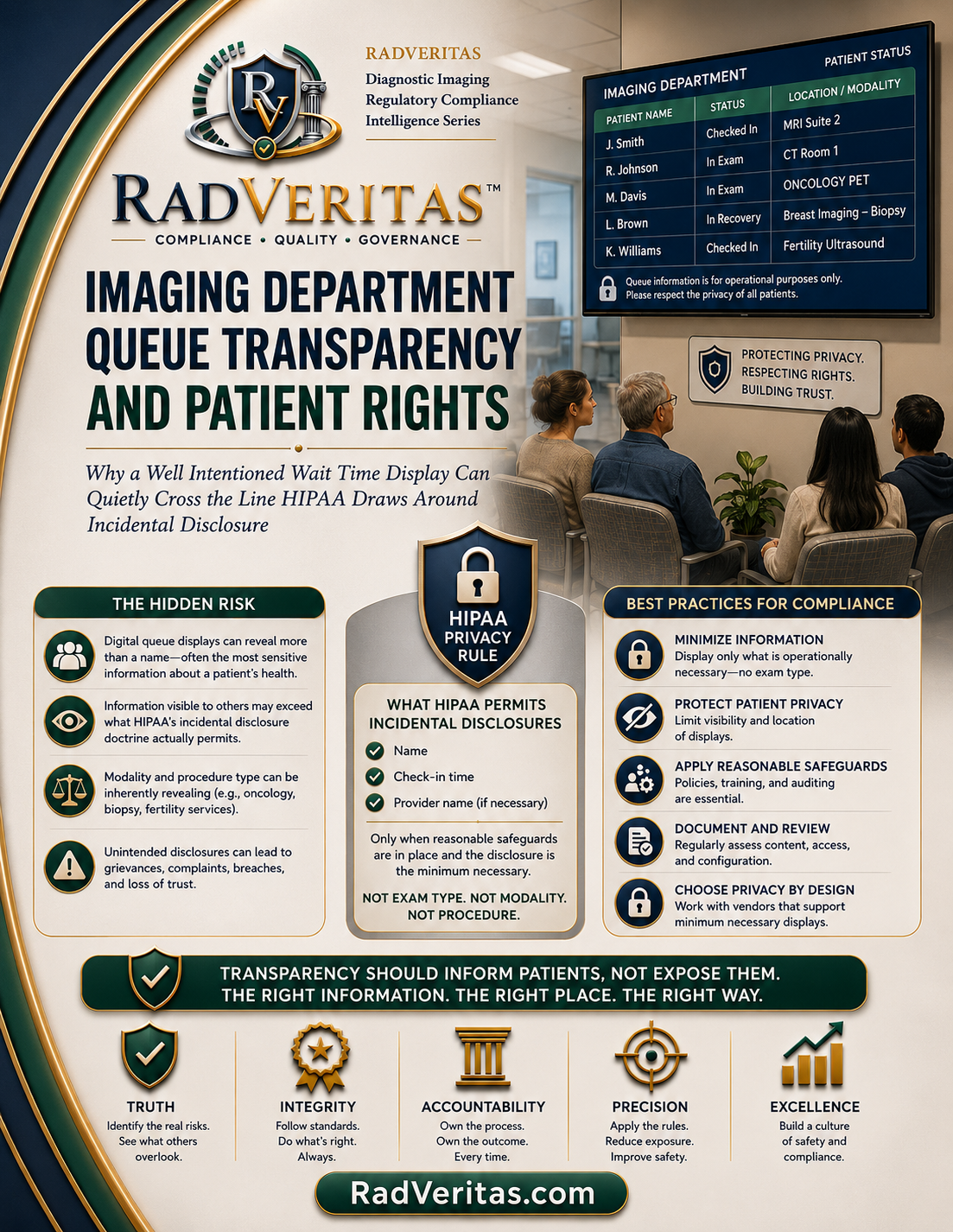
Displaying a patient's location, imaging modality, procedure type, or clinical destination may reveal sensitive medical information that extends beyond what is necessary for operational communication.
Imaging Department Queue Transparency and Patient Rights™ provides healthcare leaders with a comprehensive framework for designing patient queue management systems that improve efficiency while protecting privacy, supporting HIPAA compliance, and strengthening patient trust.
Why This Resource Matters
Transparency should reassure patients, not expose them.
A digital queue board can unintentionally disclose highly sensitive information, including oncology appointments, fertility treatments, biopsies, interventional procedures, or other clinical services simply by displaying a patient's location or examination type.
Without thoughtful governance, these systems can create unnecessary privacy risks, patient complaints, regulatory scrutiny, and reputational harm.
This executive guide helps organizations implement queue display practices that balance operational efficiency with privacy by design.
What Makes This Resource Different
Unlike general HIPAA guidance, this resource focuses specifically on the operational realities of diagnostic imaging departments and the unique privacy challenges associated with digital patient queue displays.
It provides practical, real-world guidance for developing queue management systems that support efficient patient flow while adhering to the HIPAA "Minimum Necessary" standard and the principles of incidental disclosure.
The framework addresses queue displays used in:
Outpatient Imaging Centers
Hospital Radiology Departments
Emergency Departments
Breast Imaging Centers
Oncology Imaging Programs
Interventional Radiology
MRI, CT, Ultrasound, Nuclear Medicine, and Radiography Departments
Multi-site Enterprise Imaging Networks
Comprehensive Topics Covered
HIPAA and Incidental Disclosure
Understand when incidental disclosures may be permissible and when digital displays exceed acceptable privacy safeguards.
The Minimum Necessary Standard
Learn how to configure queue systems so only operationally necessary information is displayed, minimizing unnecessary exposure of patient information.
Queue Display Governance
Develop standardized policies governing the content, placement, visibility, and management of digital patient status boards.
Privacy by Design
Incorporate privacy considerations into system configuration, vendor selection, workflow design, and ongoing operational practices.
Leadership Accountability
Establish oversight processes for reviewing queue displays, monitoring compliance, conducting audits, and implementing corrective actions.
Key Risks Addressed
The guide helps organizations identify and reduce risks associated with:
✔ Inappropriate patient identifiers
✔ Display of examination type or modality
✔ Disclosure of clinical destinations
✔ Visibility of protected health information
✔ Unauthorized viewing by visitors or the public
✔ Patient complaints and grievances
✔ HIPAA privacy concerns
✔ Regulatory investigations
✔ Accreditation deficiencies
✔ Inconsistent departmental practices
✔ Vendor configuration issues
✔ Organizational liability
Practical Resources Included
This executive guide provides actionable tools to help organizations:
Conduct queue display privacy assessments
Develop standardized display policies
Apply the HIPAA Minimum Necessary principle
Configure digital queue systems appropriately
Evaluate display locations and visibility
Audit queue board compliance
Train staff on patient privacy responsibilities
Review vendor capabilities and privacy features
Investigate privacy-related incidents
Develop corrective action plans
Sustain continuous compliance through monitoring and leadership oversight
Designed For
Ideal for:
Diagnostic Imaging Directors
Radiology Administrators
Compliance Officers
HIPAA Privacy Officers
Risk Management Professionals
Accreditation Coordinators
Information Technology Leaders
Patient Experience Teams
Imaging Managers and Supervisors
Enterprise Imaging Executives
Healthcare Operations Leaders
Organizational Benefits
Protect Patient Privacy
Reduce the risk of unnecessary disclosures while preserving patient dignity, confidentiality, and trust.
Improve Regulatory Compliance
Support alignment with HIPAA privacy requirements and organizational expectations through standardized governance and operational safeguards.
Enhance Patient Experience
Provide meaningful wait-time transparency without revealing sensitive clinical information.
Reduce Organizational Risk
Identify and eliminate privacy vulnerabilities before they result in complaints, investigations, or regulatory findings.
Standardize Operational Practices
Create consistent enterprise-wide policies governing digital queue displays across all imaging locations.
Strengthen Leadership Oversight
Equip leaders with practical tools for auditing, monitoring, and continuously improving patient privacy practices.
Built for Modern Diagnostic Imaging Operations
As healthcare organizations continue to adopt digital workflow technologies, patient transparency must never come at the expense of patient privacy.
Whether implementing a new queue management system, upgrading existing digital displays, preparing for accreditation surveys, or strengthening HIPAA compliance, Imaging Department Queue Transparency and Patient Rights™ provides the practical guidance needed to create privacy-conscious, patient-centered imaging environments.
Transparency Should Build Trust, Not Create Exposure.
A thoughtfully designed queue display can improve communication, reduce patient anxiety, and enhance operational efficiency. An improperly configured display can unintentionally reveal sensitive health information and expose the organization to unnecessary risk.
Imaging Department Queue Transparency and Patient Rights™ helps healthcare leaders establish defensible, privacy-focused practices that support operational excellence while protecting every patient's right to confidentiality.
Inform Patients. Protect Privacy. Strengthen Trust.
Reduce risk. Improve compliance. Enhance the patient experience. Build privacy into every display.
RadVeritas™
Compliance • Quality • Governance
Compliance Today. Excellence Every Day.
Expert Insights. Practical Solutions. Real-World Impact.
Helping Diagnostic Imaging Leaders Design Privacy-First Queue Management Systems That Protect Patient Rights, Strengthen HIPAA Compliance, and Deliver Operational Excellence.
Protect Patient Privacy While Improving Operational Transparency
A Practical Executive Guide for Designing Queue Display Systems That Inform Patients Without Compromising Their Privacy.
Digital queue displays have become a common feature in diagnostic imaging departments. They improve patient flow, reduce uncertainty, and enhance the waiting experience by providing real-time status updates.
However, many organizations unintentionally cross the line between operational transparency and protected health information (PHI) disclosure.
Displaying a patient's location, imaging modality, procedure type, or clinical destination may reveal sensitive medical information that extends beyond what is necessary for operational communication.
Imaging Department Queue Transparency and Patient Rights™ provides healthcare leaders with a comprehensive framework for designing patient queue management systems that improve efficiency while protecting privacy, supporting HIPAA compliance, and strengthening patient trust.
Why This Resource Matters
Transparency should reassure patients, not expose them.
A digital queue board can unintentionally disclose highly sensitive information, including oncology appointments, fertility treatments, biopsies, interventional procedures, or other clinical services simply by displaying a patient's location or examination type.
Without thoughtful governance, these systems can create unnecessary privacy risks, patient complaints, regulatory scrutiny, and reputational harm.
This executive guide helps organizations implement queue display practices that balance operational efficiency with privacy by design.
What Makes This Resource Different
Unlike general HIPAA guidance, this resource focuses specifically on the operational realities of diagnostic imaging departments and the unique privacy challenges associated with digital patient queue displays.
It provides practical, real-world guidance for developing queue management systems that support efficient patient flow while adhering to the HIPAA "Minimum Necessary" standard and the principles of incidental disclosure.
The framework addresses queue displays used in:
Outpatient Imaging Centers
Hospital Radiology Departments
Emergency Departments
Breast Imaging Centers
Oncology Imaging Programs
Interventional Radiology
MRI, CT, Ultrasound, Nuclear Medicine, and Radiography Departments
Multi-site Enterprise Imaging Networks
Comprehensive Topics Covered
HIPAA and Incidental Disclosure
Understand when incidental disclosures may be permissible and when digital displays exceed acceptable privacy safeguards.
The Minimum Necessary Standard
Learn how to configure queue systems so only operationally necessary information is displayed, minimizing unnecessary exposure of patient information.
Queue Display Governance
Develop standardized policies governing the content, placement, visibility, and management of digital patient status boards.
Privacy by Design
Incorporate privacy considerations into system configuration, vendor selection, workflow design, and ongoing operational practices.
Leadership Accountability
Establish oversight processes for reviewing queue displays, monitoring compliance, conducting audits, and implementing corrective actions.
Key Risks Addressed
The guide helps organizations identify and reduce risks associated with:
✔ Inappropriate patient identifiers
✔ Display of examination type or modality
✔ Disclosure of clinical destinations
✔ Visibility of protected health information
✔ Unauthorized viewing by visitors or the public
✔ Patient complaints and grievances
✔ HIPAA privacy concerns
✔ Regulatory investigations
✔ Accreditation deficiencies
✔ Inconsistent departmental practices
✔ Vendor configuration issues
✔ Organizational liability
Practical Resources Included
This executive guide provides actionable tools to help organizations:
Conduct queue display privacy assessments
Develop standardized display policies
Apply the HIPAA Minimum Necessary principle
Configure digital queue systems appropriately
Evaluate display locations and visibility
Audit queue board compliance
Train staff on patient privacy responsibilities
Review vendor capabilities and privacy features
Investigate privacy-related incidents
Develop corrective action plans
Sustain continuous compliance through monitoring and leadership oversight
Designed For
Ideal for:
Diagnostic Imaging Directors
Radiology Administrators
Compliance Officers
HIPAA Privacy Officers
Risk Management Professionals
Accreditation Coordinators
Information Technology Leaders
Patient Experience Teams
Imaging Managers and Supervisors
Enterprise Imaging Executives
Healthcare Operations Leaders
Organizational Benefits
Protect Patient Privacy
Reduce the risk of unnecessary disclosures while preserving patient dignity, confidentiality, and trust.
Improve Regulatory Compliance
Support alignment with HIPAA privacy requirements and organizational expectations through standardized governance and operational safeguards.
Enhance Patient Experience
Provide meaningful wait-time transparency without revealing sensitive clinical information.
Reduce Organizational Risk
Identify and eliminate privacy vulnerabilities before they result in complaints, investigations, or regulatory findings.
Standardize Operational Practices
Create consistent enterprise-wide policies governing digital queue displays across all imaging locations.
Strengthen Leadership Oversight
Equip leaders with practical tools for auditing, monitoring, and continuously improving patient privacy practices.
Built for Modern Diagnostic Imaging Operations
As healthcare organizations continue to adopt digital workflow technologies, patient transparency must never come at the expense of patient privacy.
Whether implementing a new queue management system, upgrading existing digital displays, preparing for accreditation surveys, or strengthening HIPAA compliance, Imaging Department Queue Transparency and Patient Rights™ provides the practical guidance needed to create privacy-conscious, patient-centered imaging environments.
Transparency Should Build Trust, Not Create Exposure.
A thoughtfully designed queue display can improve communication, reduce patient anxiety, and enhance operational efficiency. An improperly configured display can unintentionally reveal sensitive health information and expose the organization to unnecessary risk.
Imaging Department Queue Transparency and Patient Rights™ helps healthcare leaders establish defensible, privacy-focused practices that support operational excellence while protecting every patient's right to confidentiality.
Inform Patients. Protect Privacy. Strengthen Trust.
Reduce risk. Improve compliance. Enhance the patient experience. Build privacy into every display.
RadVeritas™
Compliance • Quality • Governance
Compliance Today. Excellence Every Day.
Expert Insights. Practical Solutions. Real-World Impact.
Helping Diagnostic Imaging Leaders Design Privacy-First Queue Management Systems That Protect Patient Rights, Strengthen HIPAA Compliance, and Deliver Operational Excellence.