 Image 1 of 1
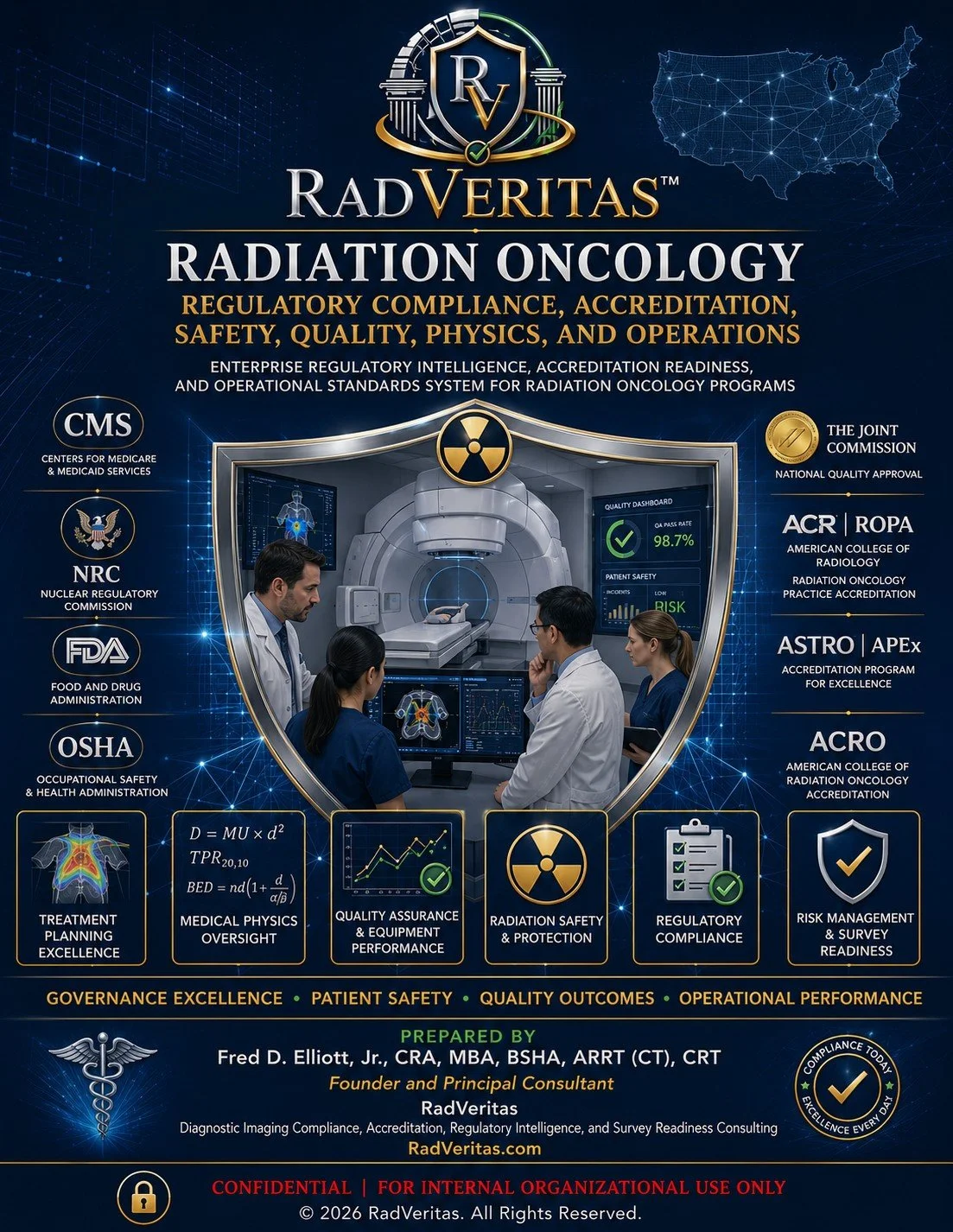
Radiation Oncology Regulatory Compliance, Accreditation, Safety, Quality, Physics, and Operations Reference Manual™
The Definitive Enterprise Resource for Radiation Oncology Compliance, Accreditation, Medical Physics, Patient Safety, and Operational Excellence
A Comprehensive Regulatory Intelligence and Operational Readiness System for Modern Radiation Oncology Programs
Radiation Oncology is one of the most highly regulated, technologically complex, and patient safety-sensitive specialties in healthcare.
Success requires more than exceptional clinical care.
It requires rigorous regulatory compliance, medical physics oversight, radiation safety management, accreditation readiness, quality assurance, performance monitoring, leadership accountability, and operational discipline.
The Radiation Oncology Regulatory Compliance, Accreditation, Safety, Quality, Physics, and Operations Reference Manual™ was developed to provide healthcare organizations with a comprehensive enterprise framework for managing the regulatory, accreditation, safety, quality, and operational requirements that define high-performing Radiation Oncology programs.
Designed for hospitals, academic medical centers, integrated health systems, cancer centers, and freestanding radiation therapy facilities, this manual serves as a centralized reference for maintaining continuous readiness, reducing organizational risk, and supporting exceptional patient outcomes.
Why Radiation Oncology Programs Require Specialized Oversight
Radiation Oncology programs operate within a highly regulated environment involving:
Complex treatment technologies
Radiation-producing equipment
Medical physics oversight
Radiation safety requirements
Treatment planning systems
Quality assurance programs
Accreditation standards
Federal and state regulations
Patient safety obligations
Clinical performance expectations
A single compliance gap, documentation failure, quality assurance deficiency, or operational breakdown can result in:
Regulatory citations
Accreditation findings
Patient safety events
Financial penalties
Treatment interruptions
Reputational damage
Increased liability exposure
Organizations that excel in Radiation Oncology establish systems that identify risks before regulators, surveyors, or adverse events do.
What Makes This Manual Different
Unlike traditional regulatory references or accreditation guides, this manual integrates every major component of Radiation Oncology program oversight into a single enterprise resource.
The framework is built around six critical pillars of excellence:
Treatment Planning Excellence
Support accurate treatment planning, clinical decision-making, workflow standardization, and treatment quality.
Medical Physics Oversight
Strengthen physics program governance, equipment performance monitoring, quality control activities, and independent verification processes.
Quality Assurance and Equipment Performance
Implement comprehensive QA systems that ensure treatment accuracy, equipment reliability, and regulatory compliance.
Radiation Safety and Protection
Promote patient, staff, and public safety through effective radiation protection programs and regulatory oversight.
Regulatory Compliance
Maintain alignment with federal, state, accreditation, licensing, and operational requirements.
Risk Management and Survey Readiness
Build sustainable systems that support accreditation success, operational resilience, and continuous readiness.
Comprehensive Areas of Coverage
Radiation Oncology Regulatory Compliance
Navigate requirements from:
Centers for Medicare & Medicaid Services (CMS)
Nuclear Regulatory Commission (NRC)
Food and Drug Administration (FDA)
Occupational Safety and Health Administration (OSHA)
State Radiation Control Programs
State Licensing Agencies
State Departments of Health
Accreditation Readiness
Support continuous readiness for:
Joint Commission Accreditation
American College of Radiology (ACR)
Radiation Oncology Practice Accreditation (ROPA)
ASTRO Accreditation Program for Excellence (APEx)
American College of Radiation Oncology (ACRO)
State and Federal Inspections
Medical Physics Program Management
Annual equipment evaluations
Acceptance testing
Commissioning oversight
Quality control programs
Performance monitoring
Independent verification processes
Physics documentation standards
Radiation Safety Programs
Radiation safety governance
Radiation protection practices
Regulatory reporting requirements
Exposure monitoring
Staff training and competency
Radiation safety committee oversight
Quality and Performance Improvement
Quality management programs
Performance indicators
Event review processes
Corrective action planning
Continuous improvement initiatives
Operational performance monitoring
Operations and Leadership
Governance structures
Leadership accountability
Staffing models
Workflow optimization
Competency management
Policy and procedure oversight
Organizational readiness programs
Organizational Benefits
Strengthen Regulatory Compliance
Maintain continuous alignment with federal, state, accreditation, and operational requirements.
Improve Accreditation Readiness
Prepare for surveys, inspections, and accreditation reviews with confidence.
Enhance Patient Safety
Support safe, accurate, and consistent treatment delivery through robust oversight systems.
Reduce Organizational Risk
Identify vulnerabilities before they become deficiencies, citations, or adverse events.
Improve Quality Outcomes
Implement evidence-based quality assurance programs that drive measurable improvement.
Support Medical Physics Excellence
Strengthen oversight of treatment systems, equipment performance, and quality control activities.
Optimize Operational Performance
Improve efficiency, accountability, documentation integrity, and program sustainability.
Built for Real-World Radiation Oncology Operations
Whether launching a new program, preparing for accreditation, responding to regulatory findings, strengthening medical physics oversight, or building a culture of continuous readiness, this manual provides the tools, guidance, and operational intelligence necessary to lead with confidence.
Every section is designed to help organizations create highly reliable Radiation Oncology programs capable of delivering safe, compliant, efficient, and patient-centered care.
Excellence in Radiation Oncology Is Built on Systems, Not Luck
The highest-performing Radiation Oncology programs do not rely on individual expertise alone.
They rely on strong governance, rigorous quality systems, effective oversight, and a culture of accountability.
The Radiation Oncology Regulatory Compliance, Accreditation, Safety, Quality, Physics, and Operations Reference Manual™ provides the framework necessary to achieve and sustain that standard.
Strengthen Compliance. Improve Safety. Achieve Excellence.
Reduce risk. Enhance readiness. Protect patients. Elevate performance.
RadVeritas™
Compliance • Quality • Governance
Expert Insights. Practical Solutions. Real-World Impact.
Helping Radiation Oncology Programs Build Sustainable Compliance Systems, Strengthen Medical Physics Oversight, Achieve Accreditation Success, and Deliver Exceptional Patient Care Through Safety, Quality, and Operational Excellence.
The Definitive Enterprise Resource for Radiation Oncology Compliance, Accreditation, Medical Physics, Patient Safety, and Operational Excellence
A Comprehensive Regulatory Intelligence and Operational Readiness System for Modern Radiation Oncology Programs
Radiation Oncology is one of the most highly regulated, technologically complex, and patient safety-sensitive specialties in healthcare.
Success requires more than exceptional clinical care.
It requires rigorous regulatory compliance, medical physics oversight, radiation safety management, accreditation readiness, quality assurance, performance monitoring, leadership accountability, and operational discipline.
The Radiation Oncology Regulatory Compliance, Accreditation, Safety, Quality, Physics, and Operations Reference Manual™ was developed to provide healthcare organizations with a comprehensive enterprise framework for managing the regulatory, accreditation, safety, quality, and operational requirements that define high-performing Radiation Oncology programs.
Designed for hospitals, academic medical centers, integrated health systems, cancer centers, and freestanding radiation therapy facilities, this manual serves as a centralized reference for maintaining continuous readiness, reducing organizational risk, and supporting exceptional patient outcomes.
Why Radiation Oncology Programs Require Specialized Oversight
Radiation Oncology programs operate within a highly regulated environment involving:
Complex treatment technologies
Radiation-producing equipment
Medical physics oversight
Radiation safety requirements
Treatment planning systems
Quality assurance programs
Accreditation standards
Federal and state regulations
Patient safety obligations
Clinical performance expectations
A single compliance gap, documentation failure, quality assurance deficiency, or operational breakdown can result in:
Regulatory citations
Accreditation findings
Patient safety events
Financial penalties
Treatment interruptions
Reputational damage
Increased liability exposure
Organizations that excel in Radiation Oncology establish systems that identify risks before regulators, surveyors, or adverse events do.
What Makes This Manual Different
Unlike traditional regulatory references or accreditation guides, this manual integrates every major component of Radiation Oncology program oversight into a single enterprise resource.
The framework is built around six critical pillars of excellence:
Treatment Planning Excellence
Support accurate treatment planning, clinical decision-making, workflow standardization, and treatment quality.
Medical Physics Oversight
Strengthen physics program governance, equipment performance monitoring, quality control activities, and independent verification processes.
Quality Assurance and Equipment Performance
Implement comprehensive QA systems that ensure treatment accuracy, equipment reliability, and regulatory compliance.
Radiation Safety and Protection
Promote patient, staff, and public safety through effective radiation protection programs and regulatory oversight.
Regulatory Compliance
Maintain alignment with federal, state, accreditation, licensing, and operational requirements.
Risk Management and Survey Readiness
Build sustainable systems that support accreditation success, operational resilience, and continuous readiness.
Comprehensive Areas of Coverage
Radiation Oncology Regulatory Compliance
Navigate requirements from:
Centers for Medicare & Medicaid Services (CMS)
Nuclear Regulatory Commission (NRC)
Food and Drug Administration (FDA)
Occupational Safety and Health Administration (OSHA)
State Radiation Control Programs
State Licensing Agencies
State Departments of Health
Accreditation Readiness
Support continuous readiness for:
Joint Commission Accreditation
American College of Radiology (ACR)
Radiation Oncology Practice Accreditation (ROPA)
ASTRO Accreditation Program for Excellence (APEx)
American College of Radiation Oncology (ACRO)
State and Federal Inspections
Medical Physics Program Management
Annual equipment evaluations
Acceptance testing
Commissioning oversight
Quality control programs
Performance monitoring
Independent verification processes
Physics documentation standards
Radiation Safety Programs
Radiation safety governance
Radiation protection practices
Regulatory reporting requirements
Exposure monitoring
Staff training and competency
Radiation safety committee oversight
Quality and Performance Improvement
Quality management programs
Performance indicators
Event review processes
Corrective action planning
Continuous improvement initiatives
Operational performance monitoring
Operations and Leadership
Governance structures
Leadership accountability
Staffing models
Workflow optimization
Competency management
Policy and procedure oversight
Organizational readiness programs
Organizational Benefits
Strengthen Regulatory Compliance
Maintain continuous alignment with federal, state, accreditation, and operational requirements.
Improve Accreditation Readiness
Prepare for surveys, inspections, and accreditation reviews with confidence.
Enhance Patient Safety
Support safe, accurate, and consistent treatment delivery through robust oversight systems.
Reduce Organizational Risk
Identify vulnerabilities before they become deficiencies, citations, or adverse events.
Improve Quality Outcomes
Implement evidence-based quality assurance programs that drive measurable improvement.
Support Medical Physics Excellence
Strengthen oversight of treatment systems, equipment performance, and quality control activities.
Optimize Operational Performance
Improve efficiency, accountability, documentation integrity, and program sustainability.
Built for Real-World Radiation Oncology Operations
Whether launching a new program, preparing for accreditation, responding to regulatory findings, strengthening medical physics oversight, or building a culture of continuous readiness, this manual provides the tools, guidance, and operational intelligence necessary to lead with confidence.
Every section is designed to help organizations create highly reliable Radiation Oncology programs capable of delivering safe, compliant, efficient, and patient-centered care.
Excellence in Radiation Oncology Is Built on Systems, Not Luck
The highest-performing Radiation Oncology programs do not rely on individual expertise alone.
They rely on strong governance, rigorous quality systems, effective oversight, and a culture of accountability.
The Radiation Oncology Regulatory Compliance, Accreditation, Safety, Quality, Physics, and Operations Reference Manual™ provides the framework necessary to achieve and sustain that standard.
Strengthen Compliance. Improve Safety. Achieve Excellence.
Reduce risk. Enhance readiness. Protect patients. Elevate performance.
RadVeritas™
Compliance • Quality • Governance
Expert Insights. Practical Solutions. Real-World Impact.
Helping Radiation Oncology Programs Build Sustainable Compliance Systems, Strengthen Medical Physics Oversight, Achieve Accreditation Success, and Deliver Exceptional Patient Care Through Safety, Quality, and Operational Excellence.