 Image 1 of 1
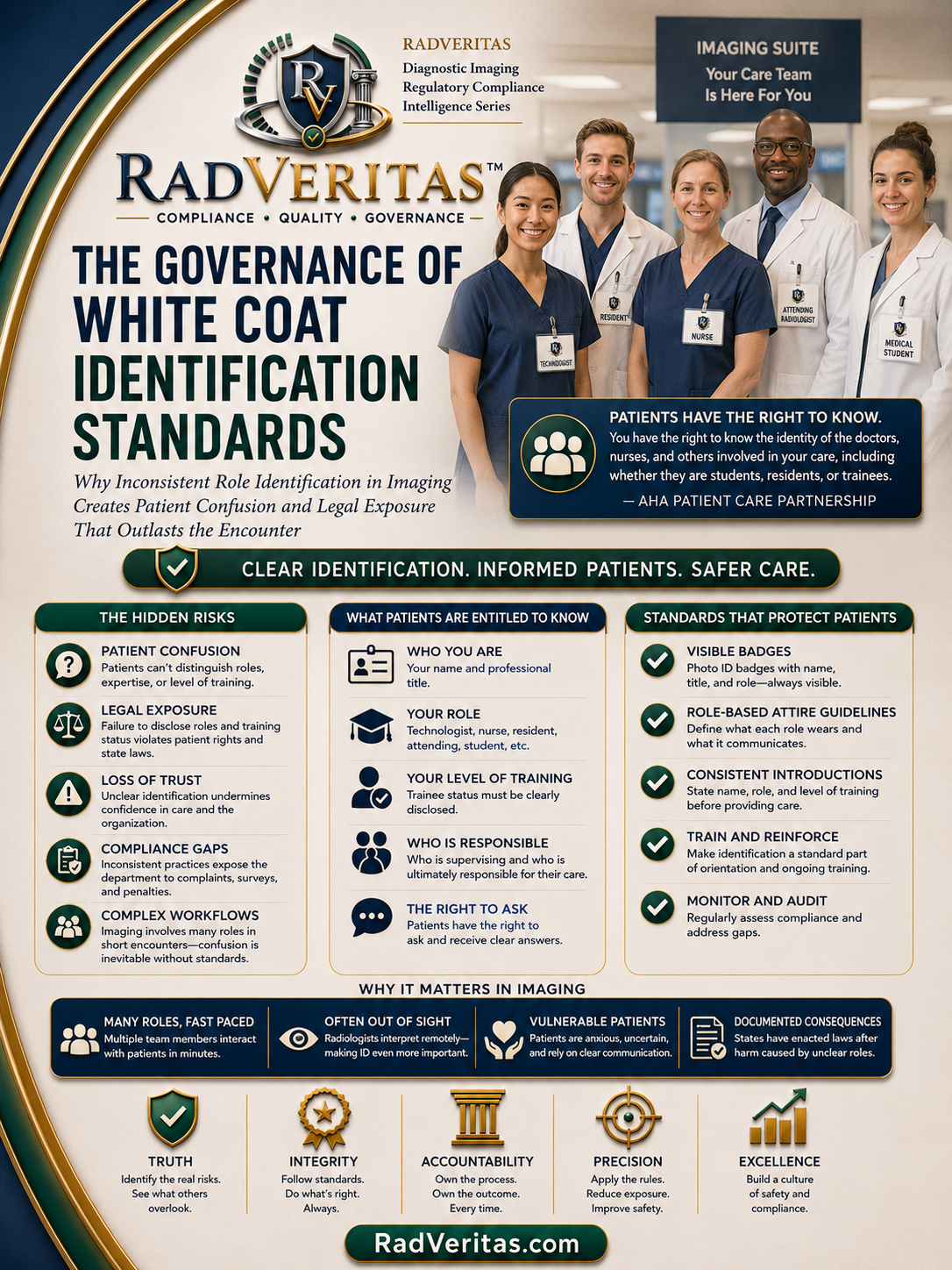
The Governance of White Coat Identification Standards™
Building Patient Trust Through Clear Identification, Professional Transparency, and Healthcare Accountability
Every Patient Has the Right to Know Who Is Providing Their Care.
A patient entering an imaging department should never have to guess who is caring for them.
Is the individual performing the examination a technologist, nurse, physician, resident, student, or trainee? Who is supervising the procedure? Who is ultimately responsible for clinical decisions?
When professional roles are unclear, patient confidence declines, communication suffers, and organizations increase their exposure to complaints, liability, and regulatory scrutiny.
The Governance of White Coat Identification Standards™ provides healthcare leaders with a comprehensive framework for establishing consistent identification practices that promote transparency, strengthen patient trust, improve communication, and support regulatory and patient-centered care initiatives across diagnostic imaging.
Why This Resource Matters
Every patient interaction begins with identification.
Patients have the right to understand the identity, role, qualifications, and level of training of every individual involved in their care. Consistent identification supports informed decision-making, reinforces confidence, and reduces confusion during what is often a stressful healthcare experience.
Without standardized identification practices, organizations may face:
Patient confusion regarding caregiver roles
Inconsistent introductions across departments
Misunderstanding of trainee participation
Communication breakdowns
Patient complaints and grievances
Survey findings related to patient-centered care
Increased legal and reputational risk
Reduced patient confidence and satisfaction
This executive guide helps organizations create a culture where professional identification is standardized, transparent, and consistently practiced.
What Makes This Resource Different
Unlike general dress code or uniform policies, this guide focuses on identification as a core element of patient safety, communication, governance, and organizational accountability.
It provides a practical framework that integrates patient rights, operational standards, professional appearance, and leadership oversight into one comprehensive governance program.
The framework supports consistency across:
Diagnostic Imaging
Emergency Departments
Outpatient Imaging Centers
Academic Medical Centers
Teaching Hospitals
Ambulatory Care Settings
Multi-Hospital Health Systems
Enterprise Imaging Programs
Comprehensive Topics Covered
Professional Identification Standards
Develop consistent policies governing photo identification badges, professional titles, credentials, uniforms, and white coat use across all imaging disciplines.
Patient Communication
Standardize introductions so every patient clearly understands who is providing care, each individual's role, and the level of supervision involved.
Role Transparency
Clearly distinguish physicians, technologists, nurses, students, residents, fellows, advanced practice providers, and support personnel through visible identification and standardized communication.
Leadership Governance
Create accountability through policies, education, monitoring, and continuous performance improvement.
Patient Rights
Support organizational initiatives that promote informed participation, transparency, respect, and patient-centered care throughout the imaging experience.
Key Risks Addressed
The guide helps organizations identify and reduce risks associated with:
✔ Patient confusion regarding caregiver roles
✔ Failure to identify trainees and supervised personnel
✔ Inconsistent badge and uniform practices
✔ Communication failures
✔ Patient complaints and grievances
✔ Loss of patient confidence
✔ Survey deficiencies related to patient-centered care
✔ Legal exposure associated with unclear role disclosure
✔ Operational inconsistency across imaging departments
✔ Weak leadership oversight of professional identification standards
Practical Resources Included
This executive guide provides actionable tools to help organizations:
Develop standardized identification policies
Establish professional badge display requirements
Define role-based attire and white coat standards
Standardize patient introductions
Create staff education and orientation programs
Develop role identification guides
Perform departmental compliance audits
Monitor adherence to identification standards
Address deficiencies through corrective action planning
Strengthen leadership oversight and continuous improvement initiatives
Designed For
Ideal for:
Diagnostic Imaging Directors
Radiology Administrators
Imaging Managers and Supervisors
Patient Experience Leaders
Compliance Officers
Accreditation Coordinators
Nursing Leadership
Medical Staff Leadership
Quality Improvement Professionals
Human Resources
Executive Healthcare Leadership
Organizational Benefits
Strengthen Patient Trust
Provide patients with clear, consistent information about the professionals involved in their care.
Improve Communication
Reduce uncertainty by ensuring every caregiver introduces themselves with their name, professional role, and responsibilities.
Support Patient-Centered Care
Promote transparency, respect, and informed participation throughout the imaging experience.
Reduce Organizational Risk
Minimize complaints, misunderstandings, and legal exposure associated with inconsistent role identification.
Improve Regulatory Readiness
Demonstrate standardized governance practices that support patient rights, communication, and quality initiatives.
Standardize Enterprise Practices
Create a consistent identification program across hospitals, outpatient imaging centers, and integrated health systems.
Built for Modern Healthcare Organizations
Professional identification is more than a name badge. It is a visible commitment to transparency, accountability, and patient-centered care.
Whether implementing enterprise identification standards, preparing for accreditation surveys, improving patient experience, or strengthening organizational governance, The Governance of White Coat Identification Standards™ provides healthcare leaders with the practical tools needed to create a consistent, defensible identification program.
Clear Identification Builds Confidence.
Patients should never have to wonder who is providing their care or what role each team member plays.
The Governance of White Coat Identification Standards™ helps healthcare organizations transform identification from a routine administrative requirement into a strategic initiative that strengthens communication, reinforces accountability, enhances patient confidence, and supports regulatory excellence.
Clear Identification. Informed Patients. Safer Care.
Strengthen transparency. Improve communication. Enhance patient trust. Build a culture of accountability.
RadVeritas™
Compliance • Quality • Governance
Compliance Today. Excellence Every Day.
Expert Insights. Practical Solutions. Real-World Impact.
Helping Diagnostic Imaging Leaders Standardize Professional Identification, Promote Patient-Centered Care, Strengthen Organizational Accountability, and Build Sustainable Compliance Through Transparency and Operational Excellence.
Building Patient Trust Through Clear Identification, Professional Transparency, and Healthcare Accountability
Every Patient Has the Right to Know Who Is Providing Their Care.
A patient entering an imaging department should never have to guess who is caring for them.
Is the individual performing the examination a technologist, nurse, physician, resident, student, or trainee? Who is supervising the procedure? Who is ultimately responsible for clinical decisions?
When professional roles are unclear, patient confidence declines, communication suffers, and organizations increase their exposure to complaints, liability, and regulatory scrutiny.
The Governance of White Coat Identification Standards™ provides healthcare leaders with a comprehensive framework for establishing consistent identification practices that promote transparency, strengthen patient trust, improve communication, and support regulatory and patient-centered care initiatives across diagnostic imaging.
Why This Resource Matters
Every patient interaction begins with identification.
Patients have the right to understand the identity, role, qualifications, and level of training of every individual involved in their care. Consistent identification supports informed decision-making, reinforces confidence, and reduces confusion during what is often a stressful healthcare experience.
Without standardized identification practices, organizations may face:
Patient confusion regarding caregiver roles
Inconsistent introductions across departments
Misunderstanding of trainee participation
Communication breakdowns
Patient complaints and grievances
Survey findings related to patient-centered care
Increased legal and reputational risk
Reduced patient confidence and satisfaction
This executive guide helps organizations create a culture where professional identification is standardized, transparent, and consistently practiced.
What Makes This Resource Different
Unlike general dress code or uniform policies, this guide focuses on identification as a core element of patient safety, communication, governance, and organizational accountability.
It provides a practical framework that integrates patient rights, operational standards, professional appearance, and leadership oversight into one comprehensive governance program.
The framework supports consistency across:
Diagnostic Imaging
Emergency Departments
Outpatient Imaging Centers
Academic Medical Centers
Teaching Hospitals
Ambulatory Care Settings
Multi-Hospital Health Systems
Enterprise Imaging Programs
Comprehensive Topics Covered
Professional Identification Standards
Develop consistent policies governing photo identification badges, professional titles, credentials, uniforms, and white coat use across all imaging disciplines.
Patient Communication
Standardize introductions so every patient clearly understands who is providing care, each individual's role, and the level of supervision involved.
Role Transparency
Clearly distinguish physicians, technologists, nurses, students, residents, fellows, advanced practice providers, and support personnel through visible identification and standardized communication.
Leadership Governance
Create accountability through policies, education, monitoring, and continuous performance improvement.
Patient Rights
Support organizational initiatives that promote informed participation, transparency, respect, and patient-centered care throughout the imaging experience.
Key Risks Addressed
The guide helps organizations identify and reduce risks associated with:
✔ Patient confusion regarding caregiver roles
✔ Failure to identify trainees and supervised personnel
✔ Inconsistent badge and uniform practices
✔ Communication failures
✔ Patient complaints and grievances
✔ Loss of patient confidence
✔ Survey deficiencies related to patient-centered care
✔ Legal exposure associated with unclear role disclosure
✔ Operational inconsistency across imaging departments
✔ Weak leadership oversight of professional identification standards
Practical Resources Included
This executive guide provides actionable tools to help organizations:
Develop standardized identification policies
Establish professional badge display requirements
Define role-based attire and white coat standards
Standardize patient introductions
Create staff education and orientation programs
Develop role identification guides
Perform departmental compliance audits
Monitor adherence to identification standards
Address deficiencies through corrective action planning
Strengthen leadership oversight and continuous improvement initiatives
Designed For
Ideal for:
Diagnostic Imaging Directors
Radiology Administrators
Imaging Managers and Supervisors
Patient Experience Leaders
Compliance Officers
Accreditation Coordinators
Nursing Leadership
Medical Staff Leadership
Quality Improvement Professionals
Human Resources
Executive Healthcare Leadership
Organizational Benefits
Strengthen Patient Trust
Provide patients with clear, consistent information about the professionals involved in their care.
Improve Communication
Reduce uncertainty by ensuring every caregiver introduces themselves with their name, professional role, and responsibilities.
Support Patient-Centered Care
Promote transparency, respect, and informed participation throughout the imaging experience.
Reduce Organizational Risk
Minimize complaints, misunderstandings, and legal exposure associated with inconsistent role identification.
Improve Regulatory Readiness
Demonstrate standardized governance practices that support patient rights, communication, and quality initiatives.
Standardize Enterprise Practices
Create a consistent identification program across hospitals, outpatient imaging centers, and integrated health systems.
Built for Modern Healthcare Organizations
Professional identification is more than a name badge. It is a visible commitment to transparency, accountability, and patient-centered care.
Whether implementing enterprise identification standards, preparing for accreditation surveys, improving patient experience, or strengthening organizational governance, The Governance of White Coat Identification Standards™ provides healthcare leaders with the practical tools needed to create a consistent, defensible identification program.
Clear Identification Builds Confidence.
Patients should never have to wonder who is providing their care or what role each team member plays.
The Governance of White Coat Identification Standards™ helps healthcare organizations transform identification from a routine administrative requirement into a strategic initiative that strengthens communication, reinforces accountability, enhances patient confidence, and supports regulatory excellence.
Clear Identification. Informed Patients. Safer Care.
Strengthen transparency. Improve communication. Enhance patient trust. Build a culture of accountability.
RadVeritas™
Compliance • Quality • Governance
Compliance Today. Excellence Every Day.
Expert Insights. Practical Solutions. Real-World Impact.
Helping Diagnostic Imaging Leaders Standardize Professional Identification, Promote Patient-Centered Care, Strengthen Organizational Accountability, and Build Sustainable Compliance Through Transparency and Operational Excellence.